



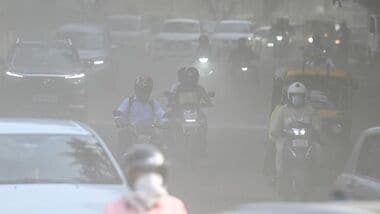
With the onset of the winter season and deteriorating air quality, the Commission for Air Quality Management (CAQM) has introduced a revised Graded Response Action Plan (GRAP) for Delhi and the National Capital Region (NCR).
According to news agency PTI, strict vehicle restrictions have been outlined, placing the focus squarely on emission standards and compliance.
The revised framework contains 48 actions across four stages, bringing certain restrictions into force earlier and removing select exemptions, PTI reported.
For motorists in , failure to comply with the updated pollution and vehicle guidelines will result in substantial penalties.
Enforcement of pollution norms is taking a stringent turn this October.
Authorities have strengthened the “” rule. Under this directive, fuel stations have been instructed not to dispense fuel to vehicles without a valid Pollution Under Control (PUC) certificate.
Motorists caught operating a vehicle without a valid PUC face a hefty ₹10,000 fine, according to PTI.
Additionally, petrol and diesel vehicles registered outside Delhi that do not meet BS-VI emission standards will be completely prohibited from entering the city from November 1.
In a further push to discourage private vehicle use during peak pollution, parking charges will be doubled.
Electric vehicles, however, will not face any additional parking charges. To reduce commuter traffic, office timings will be staggered, and a policy will be implemented under the severe stages.
The new GRAP rules determine vehicle bans based on the Bharat Stage (BS) emission category rather than simply the registration year or age of the vehicle. According to a PTI report:
Commercial transport faces even tighter curbs under the updated guidelines. The revised schedule restricts the entry into Delhi of diesel BS-IV and light and medium goods vehicles registered outside the capital.
The CAQM has officially removed earlier exemptions that allowed BS-IV and older goods vehicles carrying essential commodities to operate during the severe GRAP stages, PTI reported.
In a bid to combat air pollution at an earlier stage, several measures have been postponed. Restrictions on diesel generator sets and the entry of older, non-compliant inter-city buses have been moved from Stage II to Stage I, bringing them into force earlier during periods of air quality deterioration, according to PTI.
The CAQM is also targeting dust and construction pollution, requiring construction and demolition sites larger than 500 square metres to strictly adhere to approved dust control plans and clearly display PM levels to the public.