



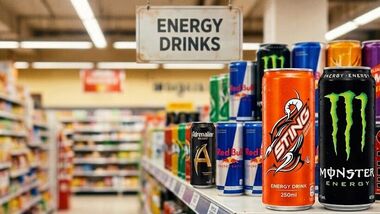
and Monster Energy India have moved court, challenging the Food Safety and Standards Authority of India () over its order restricting the use of the term “energy drink” on its high-caffeine beverages. This comes amid FSSAI’s regulatory crackdown targeting packaged food and beverage companies across the country.
The food safety regulator issued a directive on June 30 asking companies to stop using the term “energy drink” and similar descriptions for beverages containing high levels of caffeine. Companies were given 90 days to remove the disputed descriptions from their products and packaging.
Following the directive, several states began seizing stocks bearing the affected labels, according to court filings.
PepsiCo India approached a Delhi court, citing that the FSSAI directive could have “grave commercial consequences”, affecting the company’s investments.
According to its court filing, as reported by Reuters, 492 million bottles and 26 million cans carrying the disputed labels were in circulation as of July 31.
The company also said that it was not given an opportunity to present its position before the regulator issued the directive.
PepsiCo is reportedly seeking relief from the FSSAI decision to avoid potential commercial impact.
Monster Energy India has raised similar objections before the court. The company has argued that it was not given prior notice before the directive was issued. It claimed that the order had reportedly caused financial losses and reputational damage.
The companies’ legal challenge comes as the regulator’s directive threatens to affect the branding and distribution of established beverage brands in India.
The dispute stems from whether high-caffeine beverages can be marketed and labelled as “”. FSSAI has sought to restrict such descriptions, while beverage companies argue that changing established product labels could cause them significant commercial consequences.
In July, FSSAI issued notices to six major beverage manufacturers: Red Bull (Red Bull Energy Drink), PepsiCo India (Adrenaline Rush Energy Drink and Sting Energy Drink), Reliance Consumer Products (Campa Energy Drink – Gold Boost), Hell Energy, and Coca-Cola-backed Monster Energy.
The regulator called the products misleading because no official regulatory standards exist under Indian law for the term “energy drink.” However, the companies continued to market them under the specific label, as per FSSAI.
“The Food Category System under the Food Safety and Standards (Food Products Standards and Food Additives) Regulations, 2011 or the FSS Regulations is not intended for product naming or labelling purposes,” FSSAI said on social media.
The regulator emphasised that under the FSS Act 2006, food products are prohibited from making unapproved functional or therapeutic claims, such as promises to “vitalise body and mind,” “enhance focus,” “boost energy levels,” or “aid in general weakness”.
The issue has emerged as India’s energy drink market continues to expand. Retail sales are growing at 12.6% annually, while the industry is projected to reach $1.6 billion by 2028, as per Reuters.
The court proceedings will now determine whether companies need to follow the regulator’s directive restricting the use of “energy drink” or not.