



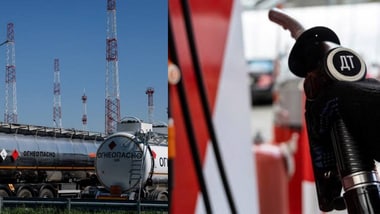
Russia has prolonged restrictions on diesel exports by domestic fuel producers through the end of October, the government said on Wednesday, as tighter supplies add pressure to an already unsettled global energy market.
Moscow has introduced export restrictions on gasoline and diesel several times in recent years as it seeks to contain domestic fuel prices and address shortages. The measures have come amid disruptions to Russian refining capacity caused by Ukrainian drone strikes on oil refineries.
“The decision has been taken to support stability of the domestic fuel market, also taking into account higher demand for motor fuels during the harvesting season,” the government stated on Wednesday.
In late August, Moscow prolonged its diesel export ban through the end of September, while exempting shipments to countries including former Soviet republics and Mongolia under intergovernmental agreements.
, typically the world’s second-largest diesel exporter after the United States, had already scaled back overseas diesel shipments during the summer before introducing the broader export restrictions.
Fuel availability and rising prices have emerged as a growing concern in the , where diesel prices have climbed above $6.50 a gallon. Supply disruptions linked to the conflicts involving Iran and Ukraine have added pressure on fuel deliveries, creating a potential political challenge for US President Donald Trump ahead of the midterm elections.
Earlier this month, attributed the rise in fuel prices to the Russia-Ukraine conflict rather than the war involving Iran, which his administration launched. He also claimed that Moscow and Kyiv had agreed to halt attacks on each other’s energy infrastructure. Neither Russia nor Ukraine confirmed any such agreement, while strikes on energy facilities continued.
Trump said on Sunday that he was considering an export ban “very seriously” as pressure mounts on his administration to bring down fuel prices in the US.
Diesel prices in the United Kingdom have also reached record levels, with motoring organisation RAC attributing the latest surge to the US-Israeli war with Iran in a statement on Monday.
The premium of the fuel over crude oil in Europe has risen to about $82 a barrel, according to fair-value data compiled by Bloomberg. This is sharply higher than the roughly $28-a-barrel premium recorded at the end of February, before the US and Israel began their war with Iran and Ukraine intensified attacks on Russian oil refineries.
Diesel prices in Europe could surge by as much as 50% if the US imposes a ban on fuel exports, potentially prompting European countries to tap emergency reserves, according to research by Oxford Economics and Goldman Sachs Group Inc.
(With inputs from agencies)
.