



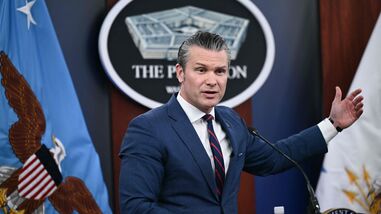
After more than a decade of military operations, the US-led coalition has formally concluded its mission in Iraq, marking the end of a campaign launched in 2014 to defeat the Islamic State (IS), according to the Pentagon.
“Today, the United States and our Coalition partners formally concluded Operation Inherent Resolve in Iraq,” the said in a release.
The Pentagon said that the withdrawal of coalition forces and equipment from Erbil Air Base marked the completion of the military mission that defeated IS as an organised military threat in .
The coalition was deployed to Iraq and Syria in 2014 after IS seized large areas of both countries and allegedly carried out mass killings and atrocities.
IS was territorially defeated in Iraq in 2017 and in in 2019. However, coalition forces remained in the region to target the group’s remnants and support local security forces.
The United States and Iraq agreed in September 2024 to wind down the coalition’s military mission. Coalition forces subsequently withdrew from bases across Iraq, with their presence eventually concentrated in the region.
The Pentagon said Iraqi security forces, including the Peshmerga and other forces in the Kurdistan region, will now take the lead in keeping IS remnants suppressed.
With the coalition mission over, the Pentagon said the primary responsibility for dealing with Iraq’s remaining security challenges now rests with the Iraqi government.
These challenges include remnants of IS as well as Iran-aligned militias that Washington says undermine Iraqi sovereignty and regional stability.
The US said it would continue to provide targeted training and intelligence support to Iraqi partners.
“The United States remains committed to counterterrorism,” the Pentagon said, adding that Washington would continue working with Iraq and other partners to prevent IS from rebuilding in Iraqi territory.
The coalition’s departure also comes as Baghdad seeks to strengthen state control over weapons held by powerful armed factions.
Prime Minister Ali al-Zaidi has pledged to reinforce the state’s monopoly over arms and encourage armed groups to hand over their weapons.
His government had initially set September 30 as a deadline for factions to disarm, but later withdrew it as talks continued over how the groups’ weapons could be brought under state control, according to AFP.
Several powerful factions have opposed disarmament, and negotiations continue on the issue.
The presence of forces became increasingly contentious after IS lost its territorial strongholds.
The withdrawal, therefore, removes a major point of friction between US and Iran-aligned armed groups in Iraq, even as the question of weapons outside state control remains unresolved.
The Pentagon said will lead efforts to secure the country and prevent IS remnants from rebuilding.
The US also said it supports a “strong sovereign Iraq” capable of securing its borders and protecting its population, with the end of the coalition’s wartime mission opening the way for deeper commercial, diplomatic and security cooperation between Washington and Baghdad.
The conclusion of the Iraq mission follows the coalition’s earlier withdrawal from and marks another major step in the winding down of the military campaign against IS that began in 2014.
With inputs from AFP.