



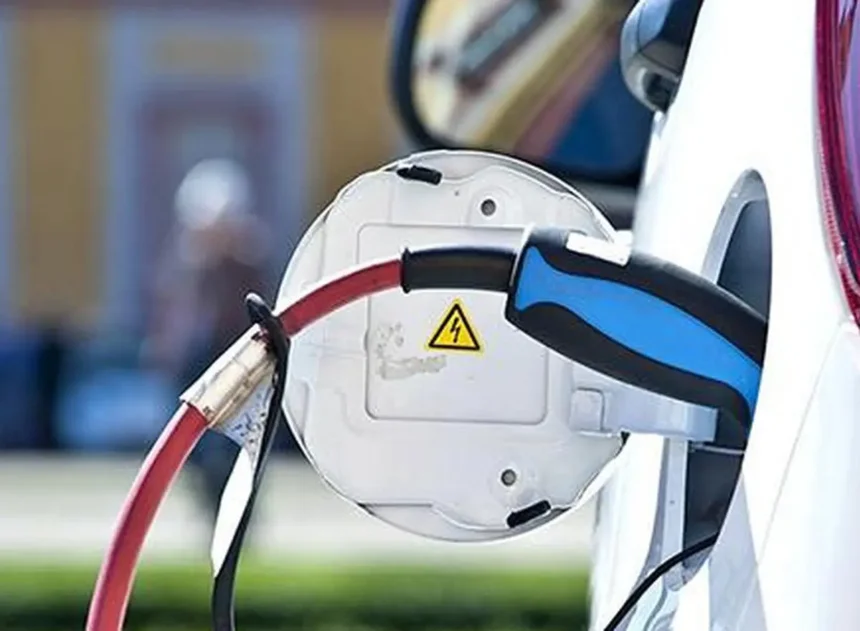
Sell 10,000 range-extender EVs and they count as 30,000 vehicles for compliance purposes; sell 10,000 flex-fuel strong hybrids and they count as 25,000. India’s final CAFE-III norms have opened two powerful compliance pathways for carmakers: super credits for electrified powertrains and separate carbon-neutrality benefits for biofuels, potentially strengthening the regulatory case for technologies ranging from JSW MG’s planned range extenders to Maruti Suzuki’s flex-fuel vehicles and Toyota’s ethanol-hybrid offerings.
The Ministry of Power’s September 29 notification assigns a volume multiplier of 3.0 to battery-electric vehicles (BEVs) and range-extended electric vehicles (REEVs), 2.5 to plug-in hybrids and flex-fuel strong hybrids, 1.6 to conventional strong hybrids, and 1.1 to flex-fuel ethanol vehicles.
The notification states: “The effective Volume (Ni) of a model ‘i’ and its variant(s) shall be calculated as below: Ni = vi × ni.”
In simple terms, 10,000 qualifying REEVs generate an effective volume of 30,000 in the fleet-average calculation. The manufacturer does not sell an additional 20,000 vehicles; rather, the multiplier gives those vehicles three times their actual weight in the compliance formula. The actual compliance benefit, however, depends on their certified fuel or energy consumption relative to the manufacturer’s broader fleet.
But volume multipliers are only part of the story. The norms also provide separate carbon-neutrality benefits for biofuels: a 22.3 per cent factor for flex-fuel ethanol vehicles, 8 per cent for eligible E20-and-above petrol vehicles, including strong hybrids and plug-in hybrids, and at least 5 per cent for CNG vehicles.
JSW MG gets the 3x route
The provisions give JSW MG’s range-extender strategy added regulatory relevance. The company’s MG ADAPT platform is designed to support battery EVs, hybrids, plug-in hybrids and range extenders.
In a REEV, the electric motor drives the wheels, while a small petrol engine acts solely as a generator to produce electricity when needed.
A qualifying REEV receives the same 3x volume multiplier as a battery EV despite having an onboard engine, providing manufacturers with another route to address charging and range concerns while improving fleet-average compliance.
Maruti gets the ethanol-CNG route
Maruti Suzuki has a different pathway. Its Wagon R flex-fuel prototype, unveiled in June, is compatible with fuel blends ranging from E20 to E100 and has been homologated on E85, according to the company.
A qualifying flex-fuel vehicle receives a 1.1x volume multiplier, meaning 10,000 vehicles are counted as 11,000 for compliance calculations. In addition, it benefits from the 22.3 per cent carbon-neutrality factor accorded to ethanol fuels.
Maruti’s sizeable CNG portfolio provides another compliance lever alongside hybrids and EVs.
Toyota can stack ethanol and hybrid benefits
Toyota has already showcased a flex-fuel strong-hybrid version of the Innova HyCross at the Advantage Maharashtra Expo earlier this year.
A qualifying production model would receive the 2.5x multiplier applicable to flex-fuel strong hybrids, while also benefiting from the carbon-neutrality treatment available for ethanol-compatible vehicles. By comparison, conventional strong hybrids receive a 1.6x multiplier, while eligible E20-and-above petrol vehicles qualify for an 8 per cent carbon-neutrality factor.
Importantly, BEVs are not simply assigned zero fuel consumption under the CAFE framework. Their electricity use is converted into petrol-equivalent consumption using a prescribed conversion factor of 0.1028.
The flexibilities stack up
The result is a compliance framework that allows manufacturers to combine EVs, REEVs, hybrids, ethanol, CNG and other efficiency technologies rather than rely on a single powertrain pathway.
“The headline stringency is real, but the flexibilities stack up,” said Amit Bhatt, Managing Director, India, International Council on Clean Transportation.
Bhatt said super credits, carbon-neutrality factors and technology credits can each reduce a manufacturer’s reported fleet-average fuel consumption. Taken together, these provisions could mean the real-world reduction in fuel use and emissions is considerably lower than the headline targets suggest.
Published on September 30, 2026