



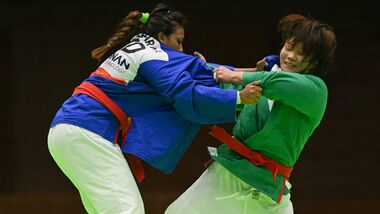
India’s Pincky Balhara is assured of at least a bronze medal in the women’s under-78kg kurash event at the Asian Games 2026 in Aichi-Nagoya after defeating South Korea’s Lim Garam 3-0 in the quarterfinals on Monday. Balhara’s semifinal appearance has also secured India’s third-ever Asian Games medal in Kurash.
Not many sports fans in India may know what kurash is or how it is played. For the unversed, kurash is a traditional Uzbek jacket-wrestling discipline contested standing up and based primarily on throwing an opponent onto the mat.
While it shares some characteristics with other grappling sports, kurash has its own scoring system, clothing requirements, prohibited techniques and competition rules.
have thus far won 37 medals in total, including four gold, 16 silver and 17 bronze. India remains in 12th place in the overall medals tally.
is a form of jacket wrestling that originated in Central Asia, particularly in Uzbekistan. The sport is governed internationally by the International Kurash Association (IKA).
Two competitors face each other on a square competition mat and use grips on each other’s jackets and belts to execute throws. The objective is to score through an effective throw rather than by holding an opponent on the ground. Ground fighting is not a regular part of kurash, and techniques such as strangulation and joint locks are prohibited.
Kurash made its debut at the 2018 Jakarta-Palembang Games. It has subsequently remained part of the continental multi-sport programme.
A kurash contest is conducted on a mat called a gilam. Athletes compete barefoot and wear a traditional jacket known as a yakhtak, along with trousers and a belt.
The competitors use the jacket and belt to establish grips before attempting to throw each other. Throws are judged according to how effectively and cleanly the opponent is brought down.
Under the IKA rules, senior men’s bouts are generally four minutes long, while senior women’s bouts last three minutes.
Kurash uses three principal technical appraisals: Khalol, Yonbosh and Chala.
Khalol is the highest technical appraisal and represents a decisive throw. It can immediately end a bout. One situation in which Khalol can be awarded is when an opponent is thrown onto both shoulders.
Yonbosh is awarded for a strong throw in which the opponent lands on their side, or for a technique that meets the relevant requirements for that appraisal but does not qualify for Khalol. Two Yonbosh appraisals can result in a Khalol.
Chala is a lower technical appraisal awarded for a less effective throw. It is typically given when a competitor is brought down onto the buttocks or belly, depending on how the technique is executed and the landing is judged.
If there is no decisive result, the winner is determined according to the scoring and penalty provisions in the rules.
In kurash, there is a specific procedure called Jazo, in which neither athlete has received a technical point or penalty by the halfway point.
The referee stops the contest and places the athletes into a prescribed belt-grip position. The competitors then attempt to execute a technique from that position. The clock is stopped during Jazo.
The outcome of the technique can determine whether the bout ends immediately or returns to normal competition for the remaining time.