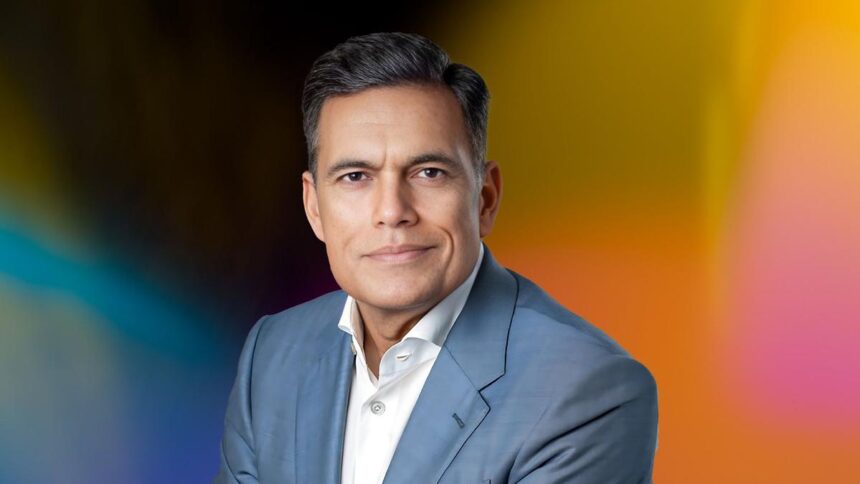
JSW Group is committing ₹2,000 crore to enter the electric commercial vehicle market, with Chairman Sajjan Jindal outlining plans to pursue a top-three position through organic expansion and acquisitions, while building towards an electric truck fleet of one lakh vehicles by around 2030.
JSW Group is betting ₹2,000 crore on its entry into electric trucks and buses, and is open to acquisitions to accelerate its push to become one of India’s top two or three commercial vehicle makers, Chairman Sajjan Jindal said, taking the conglomerate into an industry dominated by established truck manufacturers.
JSW Greentech will start with a 90-acre factory in Chhatrapati Sambhajinagar, capable of producing 15,000 vehicles annually, including 10,000 electric buses and 5,000 electric trucks. But Jindal describes the facility as an “entry strategy”. His longer-term ambition is to build an electric truck business capable of producing up to one lakh vehicles annually by around 2030.
“Once we as JSW Group get into that area, then we would also want to be one of the largest players, among the top two or three in the market,” Jindal said during an exclusive media preview ahead of the commercial EV brand launch.
JSW is prepared to use acquisitions alongside organic expansion to achieve that goal, extending a strategy Jindal has used to build scale in other businesses. He drew a parallel with steel, where JSW expanded until its size altered the competitive equation with larger incumbents.
Jindal believes the shift to electric vehicles gives a newcomer an unusual opening because JSW is entering the commercial vehicle market without decades of investment in diesel engines and related technologies to protect.
“In any industry, the existing players can become a little complacent,” he said, arguing that companies that have already invested in “the engine plant, in the technology, in everything” can be slower to embrace a radically-different technology.
JSW, by contrast, is starting with an electric-only commercial vehicle operation. The first truck will be a 55-tonne tractor-trailer, followed by tippers, fixed-body trucks and dumpers. Its electric bus portfolio is planned to span vehicles from 7 metres to 18 metres, covering city transit, staff transport, school bus and airport applications. Jindal said trucks are particularly attractive because their high utilisation magnifies the savings potential from replacing diesel.
“We are more excited about the trucks because that, I feel, will be a game changer for India,” he said.
The economics, however, remain challenging. JSW estimates that a heavy diesel truck costs roughly ₹25 lakh, compared with about ₹85-88 lakh for an electric equivalent. However, a truck travelling 100,000 km annually at around 2.5 km per litre could consume roughly 40,000 litres of diesel, costing about ₹40 lakh a year at ₹100 per litre. That is where JSW believes electric trucks can transform the economics despite their higher purchase price.
“The disruption is not in the upfront price, but in the total cost of ownership,” JSW Greentech Chief Executive Sumit Mittal said. The company is targeting a 15-20 per cent reduction in total cost of ownership, he added.
JSW also has something most new vehicle makers lack: Its own potential proving ground. Around 17,000 trucks operate across its steel, cement and ports ecosystem. Mittal estimates that 40-50 per cent of current use-cases could be electrified relatively quickly, particularly trucks operating on predictable, closed-loop routes.
The Sambhajinagar plant will integrate cell-to-battery-pack manufacturing, truck cabin production and in-house bus body construction. JSW also says it will house India’s first commercial vehicle plant with a pre-treatment and electro-deposition facility.
For Jindal, the commercial vehicle venture is part industrial opportunity and part bet that electrification can reduce India’s dependence on imported oil. He acknowledges that taking on established truckmakers will require JSW to master an industry in which it has little legacy experience.
“There will be challenges. There will be difficulties,” Jindal said. “But once we jump into the ocean, we have no option but to swim.”
Published on September 22, 2026