



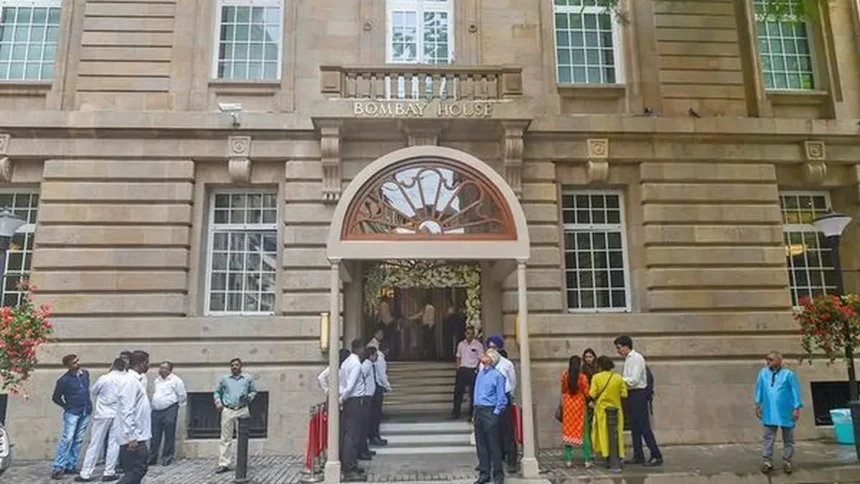
The board of Tata Group’s holding company will meet Thursday to discuss how to handle a listing mandated by India’s central bank, including if outgoing Chairman Natarajan Chandrasekaran should be asked to stay on.
A last-minute addition to the meeting agenda is a discussion of the Nomination and Remuneration Committee’s recommendations, according to people with knowledge of the matter. The so-called NRC is expected to recommend asking Chandrasekaran to reconsider his decision to step down, the people added, asking not to be identified discussing internal matters.
The Reserve Bank of India’s refusal to relax listing rules for Tata Sons Pvt. has turned what was meant to be a routine board meeting into a high-stakes discussion on the way forward.
Chandra, as he’s commonly known, said last month that he plans to step down when his term ends in February, forcing the group to prepare for a leadership transition. His planned exit followed months of friction with Tata Trusts Chairman Noel Tata over the listing issue and capital allocation across the sprawling conglomerate.
A Tata Sons representative did not immediately respond to a request for comments.
Tata Sons had sought an exemption from the listing requirement to avoid tighter regulatory scrutiny and expanded public disclosures. A public float would force the holding company to reveal far more about the finances and governance of the group’s sprawling businesses — from steel and autos to software, airlines and consumer goods — and could dilute the influence of Tata Trusts, a group of charities that control the company.
After rejecting Tata Sons’ plea for an exemption from an initial public offer, the RBI also filed a caveat in the Bombay High Court to ensure its position is heard before any order is passed should Tata Sons seek legal relief, the Economic Times reported. The newspaper first reported the possibility of the NRC asking Chandra to reconsider his decision on Sunday.
“Tata Sons and Tata Trusts should work towards an IPO of Tata Sons rather than pursue prolonged litigation or alternative structures aimed at remaining unlisted,” InGovern Research, a proxy advisory, said in a Sept. 16 report. “The RBI has shown that it is tenacious by having filed a caveat in the Bombay High Court.”
The Tata Group values its current ownership structure, arguing that it allows the business to take a long-term view across its portfolio without public-market pressures. The group, with $185 billion revenue, controls over two dozen listed companies, and is also key to India’s high-end technology ambitions — having committed to producing the first homegrown semiconductor chips.
The RBI’s public-float mandate aligns with long-standing demands from the debt-laden Shapoorji Pallonji Group, Tata Sons’ biggest minority shareholder, which has been pressing for a listing to unlock value from its 18.4% stake.
Besides giving liquidity to SP Group and other listed Tata companies that hold a stake in Tata Sons, a listing will give capital flexibility to raise funding and “subject the Tata Trusts’ special rights to greater scrutiny,” according to InGovern Research.
(Adds expert comment in the eighth and last paragraphs.)
More stories like this are available on bloomberg.com
©2026 Bloomberg L.P.
Published on September 17, 2026