



A Delhi lawyer has initiated the first legal challenge against the Centre’s decision to charge merchants for accepting Unified Payments Interface (UPI) payments of ₹2,000 or more.
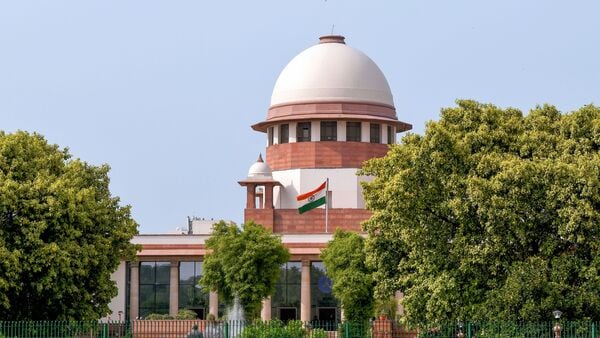
Advocate Anjan Datta, who filed a public interest litigation against the 2026 University Grants Commission (UGC) regulations and won a stay, filed a plea in the Supreme Court on Wednesday, seeking the quashing of the new merchant discount rate () framework.
“… impugned action bears directly upon the fundamental rights of an exceptionally large and largely unorganised class of citizens,” stated the 54-page writ petition seen by Mint.
Datta, who also challenged the Place of Worship (Special Provisions) Act, 1991, argued that a change of this nature, affecting citizens at large, cannot be brought in through a press release without clear legislative policy, standards, publication and regulatory supervision.
The government announced on 15 September that a 0.4% MDR will be levied on of ₹2,000 or more, with a cap of ₹300 on transactions of ₹75,000 or more. Person-to-person (P2P) UPI payments, however, will remain free.
Certain essential sectors will incur a flat ₹5 charge, while capital market transactions will incur a 0.02% MDR capped at ₹300. Small merchants receiving up to ₹1 lakh per month through UPI QR payments have also been excluded from the MDR framework.
One of Datta’s central arguments is that the notification has not created any legal ground and was imposed unequally and without a clear legal framework. According to the petition, this makes the levy arbitrary and discriminatory, and violates the constitutional rights to equality under Article 14 and to carry on a profession or business under Article 19(1)(g).
“This selective and unequal withdrawal, and the consequential fixation of a detailed, multi-tiered financial levy through a press release rather than a notified statutory instrument, and without any legislatively prescribed guidelines, criteria, or Gazette publication governing the rates, caps, or sectoral classifications so fixed, is assailed herein as manifestly arbitrary, discriminatory, and violative of Articles 14 and 19(1)(g),” read the petition.
In the plea, he said he was not challenging the government’s stated objective of maintaining and funding digital payments infrastructure. Rather, he questioned the legal route through which the new burden was created and the powers given to the executive to determine its contours.
Datta also challenged the distinction between UPI and . While UPI loses statutory no-charge protection above ₹2,000, RuPay debit card payments continue to enjoy the protection irrespective of transaction value.
He said that both are electronic payment instruments with overlapping consumer and merchant bases and argued that the distinction lacks an “intelligible differentia having a rational nexus” with the objective of promoting digital payments.
He also questioned the thresholds that were built into the MDR regime. He stated that there is no publicly disclosed data or determining principle supporting the ₹2,000 transaction threshold, ₹1 lakh monthly-receipt exemption for small merchants or the ₹75,000 level at which the MDR is capped at ₹300.
“The petitioner therefore seeks production of the complete record; quashing or suspension of the framework in so far as it imposes MDR above ₹2,000,” the petition said.
It also sought “transparent consultation”, protection for micro and small enterprises, safeguards against pass-through and digital exclusion, and independent review by the Reserve Bank of India and the Union government.
“A transaction of ₹2,001 attracts a percentage charge while one of ₹2,000 does not,” the petition said, arguing that such “cliff” treatment could distort payment behaviour and discriminate between similarly placed merchants.