



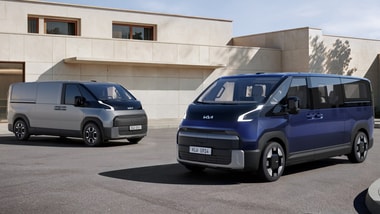
Kia announced the PV7 electric van worldwide on 16 September, bringing its second electric van following the PV5. The new model will come in both Passenger and Cargo versions, which will have cross-over payload capacity of up to 11 seats in South Korea and 1,200kg of payload for the latter.
The Kia PV7 will be launched in South Korea and Europe in the second half of 2027. It comes with two battery types: a 268hp front-mounted electric motor and a claimed WLTP range of up to 460km (later to be followed by an all-wheel drive version).
According to Kia, the PV7 is based on its 800V E-GMP.S architecture. The battery can charge from 10% to 80% using a 350kW DC fast charger in the mid-20-minute range.
The electric van will also have two charging ports. This includes a front AC/DC charging port and an optional rear AC charging port.
to launch the PV7 in South Korea and Europe in the second half of 2027. The company has also confirmed an AWD version will follow its initial launch.
The PV7 follows a design theme similar to the smaller PV5 but is larger in size. It is 5,350mm long, 1,995mm wide, 1,990mm high and has a wheelbase of 3,500mm.
The van has thin LED headlights, a black front grille with silver accents and C-shaped LED daytime running lights. Sliding doors to both versions, and optionally manually operated in the Cargo version.
has added slim wraparound taillights to the rear. The basic lift-up tailgate is integrated in the passenger version; twin-swing tailgates are also available in the cargo version.
The Passenger version will seat up to nine in most markets; Kia indicates there will be an 11-seat version in South Korea. There will also be a seven-seat configuration with removable seats.
The cargo version can carry up to 1,200 kg. It will come in compact, long and high-roof varieties and will offer various payload capacities, roof heights, and storage volumes. Kia will also be available for specialist applications in a chassis cab version.
The PV7 gets a 14.6-inch infotainment screen running Pleos Connect system, which is based on Android Automotive OS. Inside the cockpit are also a digital driver display and a squared-off steering wheel.
Kia claims the Passenger variant will feature ambient dashboard illumination, while all seats except the front seats will have AC vents in the roof and 100W USB-C charging at each port.
The PV7 has seven airbags for safety, including a co-driver airbag in the roof, and has Level 2 ADAS. More conversion models and markets will follow the initial plans Kia mentions. An India launch has not been announced, and the PV7 is currently planned for South Korea and Europe from the second half of 2027.