


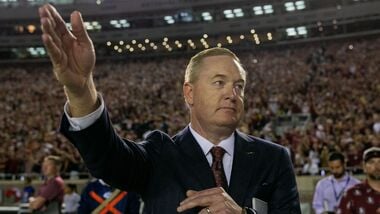
dismissed athletic director Michael Alford on Monday, president Richard McCullough announced, as the Seminoles face hard choices about a football program that has slid far from its 2023 peak.
Senior associate athletics director Bruce Warwick will serve as interim AD while the school runs a national search for a permanent successor.
“Michael Alford has served the University and our student-athletes with dedication, and we thank him for his contributions to our athletics programs,” McCullough said in a statement. “As we begin this transition, our focus remains on the success of our teams and continuing to provide every competitive advantage we can to our student-athletes, coaches, and staff.”
Michael Alford came to Tallahassee in 2020 to lead Seminole Boosters. A year later, he was named athletic director as Florida State stared at financial shortfalls and a football team that had underachieved. Since 2022, total athletics revenue has grown 31.5 percent, the largest increase in department history. Conference distributions rose 19 percent after a new ACC revenue model Alford helped design. The school also spent more than $500 million on a standalone football facility, Doak Campbell Stadium upgrades and other projects.
Those wins on the ledger did not settle the football argument.
After going 13-0 and winning the in 2023, Florida State missed the four-team College Football Playoff and was blown out 63-3 by Georgia in the Orange Bowl. The Seminoles have gone 8-18 since that season, and calls to fire coach Mike Norvell have grown louder.
After a 5-7 finish last year, the administration kept Norvell for a seventh season and promised structural changes. He hired a general manager, remade the personnel department and received a football budget near $30 million. That figure is improved, but it still sits below the national top tier.
At the time, McCullough said in a joint statement with Alford and Board chair Peter Collins, “This decision reflects a unified commitment to competing in the rapidly evolving landscape of college football, while maintaining continuity within the program.”
Florida State then lost at home to SMU 27-24 on Labor Day night. Fans chanted “Fire Norvell” as they left the stadium. The Seminoles visit No. 10 Alabama on Saturday and then hit an ACC stretch that includes ranked Virginia, Louisville and rival Miami.
Beyond the on-field slide, Florida State carried the highest athletic-related debt in the country for the 2025 fiscal year, $437 million after those infrastructure projects. People inside the university believe Alford and Norvell underestimated how much football spending would rise after 2023. Alford was initially reluctant to spend above the new revenue-share cap when it took effect in 2025. Discontent among administrators and boosters built until it reached a breaking point.
“Changes like this are never easy, but sometimes necessary,” Florida State Board of Trustees Chairman Peter Collins said in a statement. “We have made significant investments and structural changes in our athletics program and Seminole Boosters over the past few years, but more are needed. This step begins the next phase of restructuring that the University must commit to in order to compete in this era of college sports. The President and the Board are in lockstep on the mission and what the results must be.”
Alford will not decide Norvell’s future. That call now belongs to McCullough, Collins and the next athletic director