



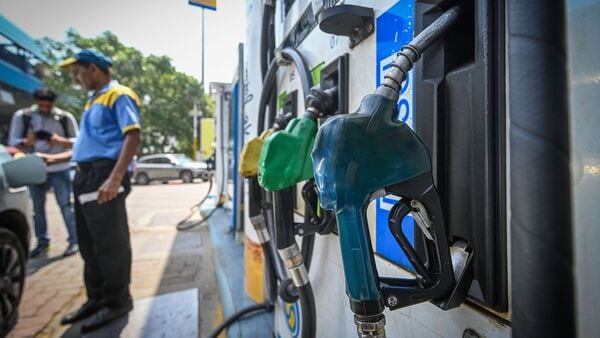
The top body of Indian auto dealers on 7 September reported that compressed natural gas (CNG), electric and hybrid vehicles overtook petrol-run vehicles in sales for the first time in August.
However, diesel vehicles still hold sway among a sizeable section of car buyers. While the share of petrol vehicles in passenger vehicle sales declined sharply, diesel-run vehicle sales saw a minor dip, data from the Federation of Automobile Dealers Associations (Fada) showed. Mint takes a closer look at the shift.
The market share of petrol passenger vehicles fell to 40.85% in August 2026 from 49.97% in April 2025, when Fada began reporting fuel-wise shares.
While electric vehicle sales have risen slightly and hybrid car sales have remained stagnant, compressed natural gas (CNG) vehicles have surged the most, with their share in passenger vehicle sales rising from 19.67% to 25.28%.
Passenger vehicle makers India Ltd, Tata Motors Passenger Vehicles Ltd and Hyundai Motor India Ltd also saw the share of CNG vehicles in their portfolios rise, driven by expanding infrastructure for refuelling.
One key factor driving the adoption of CNG vehicles is their lower total cost of ownership compared to petrol-run vehicles. Besides, rising sales of CNG cabs have helped raise their share.
While there were expectations that diesel would struggle to find a market after the implementation of BS-VI emission norms in 2020, the fuel has held its ground. Buyers of large sports utility vehicles (SUVs), in particular, continue to favour diesel, which is cheaper, offers better fuel economy on long runs and provides greater pulling power than petrol.
The share of diesel-run vehicles has fallen to 17.21% in August from 18.47% in April 2025—a far more modest decline than that of petrol vehicles.
While industry-wide data on the fuel-wise split of SUV sales isn’t available, Vahan registration data for SUV maker Mahindra & Mahindra Ltd showed that more than two-thirds of its monthly sales still come from diesel-powered vehicles. The Hyundai Creta, the largest-selling mid-size SUV, has more than a third of its buyers opting for diesel.
has been selling across the country since the start of fiscal year 2024-25, drawing backlash from a section of car buyers.
Sai Giridhar, president, Fada, told Mint last week that concerns over ethanol blending and its impact on fuel efficiency did affect a section of consumers’ buying decisions, leading to a decline in those opting for petrol-run vehicles.
He, however, noted that concerns are now tapering off as carmakers assure buyers that new cars are E20-compliant and will not be affected.
So far, no such blending has been announced for diesel fuel.
Industry executives have repeatedly pointed to diesel SUV buyers as a key target segment for hybrid vehicles. Since hybrid technology needs to accommodate both a fuel tank and a battery, hybrid offerings are currently concentrated in larger SUVs—the same segment where diesel remains particularly popular.
However, with hybrid cars costing more than their diesel counterparts and offering no tax advantage over diesel vehicles, scaling up their adoption has become difficult. Under the pre-goods and services tax ()-cut tax structure, large diesel SUVs attracted a total tax of 50%, while hybrids were taxed at 43%. Since the September 2025 GST cut, however, both hybrids and large diesel SUVs have been subject to a 40% tax rate.
The rollout of the third iteration of corporate average fuel efficiency (CAFE) norms, which limit carbon emissions from a carmaker’s fleet, alongside BS-VII norms, is expected to push carmakers away from diesel.
Auto industry veteran Arun Malhotra said diesel technology has evolved to meet BS-VI norms and remains popular among large SUV buyers. While diesel has no tax disadvantage in the large SUV segment, he noted that the impact of CAFE 3 and BS-VII norms on diesel vehicles remains to be seen.