



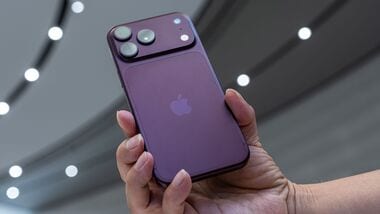
The iPhone 18 Pro and iPhone 18 Pro Max are making a significant leap in camera technology. The most notable modification is the physically rotatable aperture on the 48MP primary camera, which provides greater control over the amount of light that enters the lens and how much of a scene stays in focus.
The new camera system additionally provides manual controls, enhanced video capabilities, and an AI-powered focus system. Additionally, Apple is introducing a new Reference Capture mode to ensure that photos are authentic, given the rise of advanced AI editing.
The and Pro Max may be the first iPhones to have a true variable aperture. According to Apple, the 48MP main camera uses six laser-cut blades that can be adjusted across four aperture settings.
More light reaches the sensor and can lead to a greater background blur with a wider aperture. A smaller opening will restrict the amount of light that passes through and may help to focus more of a scene. There is an automatic or manual control of the aperture.
According to Apple, the system can enhance low-light photography and enable it to maintain background detail during group photos.
The feature of variable aperture has been seen on several phones in the past. The technology was made use of by Samsung in the Galaxy S9 and S10, but the company has since discontinued it. Reports in August also indicated that Samsung had abandoned plans to incorporate the feature into the Galaxy S27 due to thickness, cost, and the fact that it wasn’t adding much image quality.
The built-in Camera app also features a separate Pro controls panel. It provides manual control of aperture, shutter speed and white balance settings. A live histogram has also been added. The graph can be used to help determine exposure and possible under- or over-exposure in the photograph.
Apple has also revamped its computational photography workflow. Those changes will bring clearer images with more detail and decrease unwanted processing artefacts, the company says.
s AI-powered smart focus system tracks a chosen moving object. The feature might be especially handy if you are taking photos of children, pets or sports. Apple has also expanded its video tools. Film-like effects can be added to footage captured at up to 60 fps and then later in post-production. 4K and Dolby Vision HDR time-lapse recording is supported.
The company has also enhanced the voice clarity and voice separation in the audio mix, improving the distinguishing of speech from background music.
Texture and grain controls have been added to photographic styles along with colour and mood controls. This provides users with additional options to achieve a uniform visual appearance without being completely dependent on third-party editing tools.
One of the more unusual additions is the Reference Image. While in reference capture mode, Apple claims that image sensor data is cryptographically signed and fed through its Private Cloud Compute system to produce an unalterable reference version.
The regular photo is always included, and the reference version is kept with it in the Photos app. The users are able to check the two images and see if changes have been made. Apple also says the system will support the SynthID watermarking standard, which is designed to identify AI-generated or AI-edited content. It’s intended for a range of users, such as photographers, journalists and even regular users, who want to know if a digital photograph has been edited.