



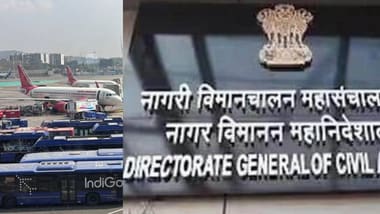
India’s aviation regulator, the Directorate General of Civil Aviation (DGCA), has asked airlines to carry out a one-time drug screening of all pilots by July next year, a government official said, amid a series of recent incidents involving crew members allegedly found under the influence of drugs.
The testing process has already begun across airlines, the official told reporters in New Delhi, speaking on condition of anonymity ahead of a formal announcement by the .
The directive comes after an unusual incident involving an Air India-operated Airbus SE A320, in which all three hydraulic systems reportedly failed simultaneously. Such a failure is considered extremely rare given the aircraft’s multiple layers of redundancy. The malfunction caused the autopilot to disconnect and the aircraft to lose about 300 feet of altitude.
After the flight from landed in India on August 4, the captain tested positive for illegal drugs. Investigations have not established whether the pilot’s condition contributed to the mid-air plunge, but an interim report released last Friday by India’s Aircraft Accident Investigation Bureau (AAIB) called the drug-use discovery a “serious concern” and urged the regulator to take “appropriate actions” urgently.
“The confirmation of use of psycho-active substance is a serious concern and AAIB recommends appropriate actions by DGCA on priority,” it said.
Air India dismissed the pilot-in-command after he tested positive for a psychoactive substance.
“The Pilot-in-Command of the Phuket-Delhi flight tested positive for a psychoactive substance. In line with Air India’s zero-tolerance approach to violations of safety, fitness or regulatory requirements, the pilot’s employment has been terminated with immediate effect,” the airline said in a statement.
According to the report, the 34-year-old captain held a valid Airline Transport Pilot Licence and had accumulated around 5,055 hours of flying experience, all on the A320. The 32-year-old co-pilot held a Commercial Pilot Licence and had logged approximately 1,394 hours of total flying experience, including on the A320.
Both pilots had received nearly 22 hours of rest before operating the flight.
Air India Ltd. had earlier said it would carry out one-time drug screening for all its pilots following the incident.
Civil Aviation Minister Kinjarapu Rammohan Naidu told reporters in New Delhi that the draft rules on the “amended drug test rules for pilots” are expected to be finalised by the end of this month.
Naidu did not provide details of the proposed amendments. The changes are, however, expected to introduce stricter requirements for screening pilots for psychoactive substances and expand the rules to cover the airline industry more comprehensively.
Meanwhile, the aviation regulator is engaging with airlines on proposals to tighten the existing rules governing drug tests. In a separate development, Malaysia Airlines made drug screening mandatory in August after a member of its cockpit crew was arrested on allegations of narcotics smuggling.