



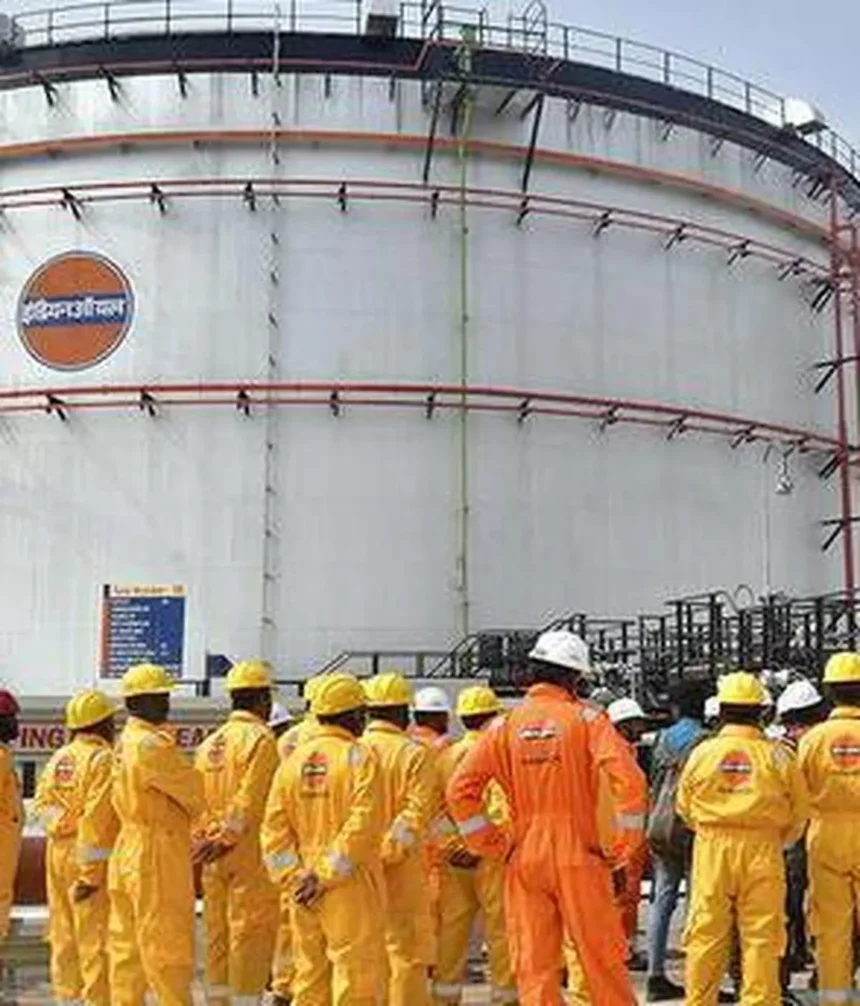
State-run Indian Oil Corporation (IOCL) will leverage Project Sprint 2.0 to transform India’s largest oil marketing company with focus not just on strengthening and expanding its retail outlets (ROs), but also to enhance brand visibility and create a more customer-centric image.
The country’s largest fuel retailer, who accounts for more than 40 per cent of the around 1.07 lakh petrol pumps countrywide, aims to increase presence in high fuel and product consuming markets, while charting out a more consumer focussed strategy across retail, commercial and industrial segments.
“Sprint is not only about costs. It’s also about expanding market share, enhancing operational efficiency and bringing in more optimisation,” emphasised IOCL Chairman A S Sahney in an exclusive interaction with businessline.
Last year, Project Sprint helped us save around ₹2,200 crore. For instance, IOCL’s Fuel & Loss stood at 8 per cent in Q1 FY27, compared to 8.5 per cent in Q1 FY26 and FY26, which is a “very good margin” to save.
“Q1 FY27 was the most difficult quarter that any oil and gas company has faced. What worked for IOCL during the West Asia conflict was our optimisation measures, and operational efficiency initiatives. We started these initiatives a year back under Project Sprint,” Sahney noted.
Launched on April 1, 2025 and the first major strategic initiative of under Sahney, Sprint focuses on ramping up core capabilities and unlocking new horizons of operational efficiency, high-tech innovation, customer-centricity, sustainable growth and talent development.
Sahney explained that Sprint is an on-going initiative for three years. Sprint 1.0 provided good learnings. Under Sprint 2.0, launched on April 1, 2026, the targets have become ambitious and practical.
“We have become very serious about our customer focus and brand image, including ROs and industrial business group. We are trying to take all of them together. Our Retail Sales is now a separate business unit. Going ahead, it will provide more focus on our product sales efforts from ROs,” he added.
A major driving force behind Sprint is also an emerging scenario where IOCL will have a cumulative 27 million tonnes per annum (mtpa) of refining capacity by FY27end—9 mtpa has been added with around 17.3 mtpa to come online likely by December 2026.
“This will likely process around 10-12 million tonnes diesel, which we will have to sell. Diesel growth is not as high as petrol. So, we will have to focus on sales through ROs. For this we need to strengthen and enhance the quality of our ROs. Besides, we will also enhance our brand presence,” Sawhney emphasised.
The OMC expects its refinery throughput in FY27 at 77 mtpa, FY28 (85 mtpa) and FY29 (90 MTPA). It has also created a Profitability Improvement Group in the refinery division, under Project Sprint.
IOCL Director (Finance) Anuj Jain in the company’s Q1 FY27 analyst call said that Sprint 2.0 is likely to help save ₹2,000-₹2,500 crore in FY27.
“Essentially, through Sprint, we have brought down our wastage and losses across various segments and have optimised our operations. This is leading to better profits and has also helped us to increase our market share,” he added.
For instance, IOCL is working on commissioning ROs in main city markets, and on major highways. Increasing utilisation of highway ROs. In nutshell, increasing the throughput (sales) at ROs.
Second, it is increasing operational efficiency of LPG bottling plants, and jet fuel business, while also working on increasing market share in Lubes, Fuel Oil (FO) & Bunker fuel, which will bring in more revenues.
Published on August 8, 2026