



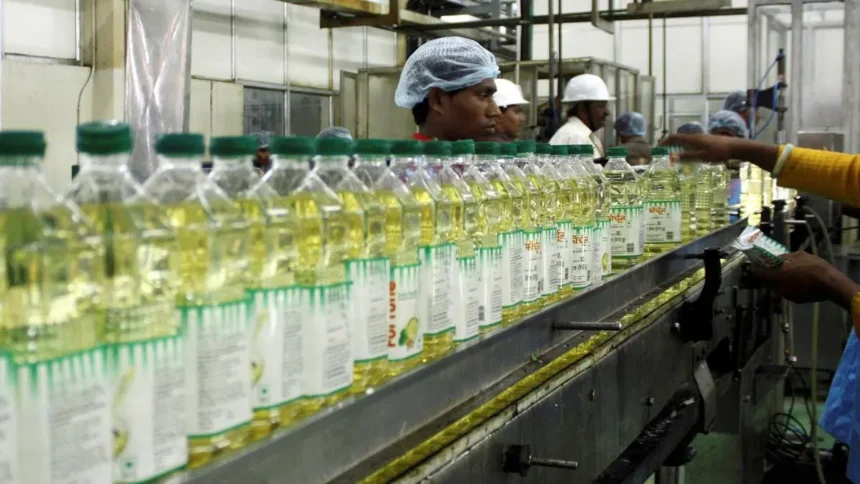
AWL Agri Business has built up inventories of imported edible oils over the past two
months, adopting a strategy similar to the one it used during
COVID to guard against supply snarls from geopolitical
conflicts, its CEO told Reuters.
Businesses globally are grappling with shipping disruptions
stemming from wars in the Middle East and between Russia and
Ukraine, prompting many to reassess their sourcing and logistics
strategies.
AWL, the market leader in India’s edible oil sector and
maker of Fortune cooking oil, has increased inventory cover for
imported edible oil to 40-45 days from its usual 30-35 days.
“Keeping in mind all this disruption, because we are living
today in a very dynamic world and you don’t know what’s going to
happen tomorrow, we have, to some extent, improved or increased
the holding days,” CEO and Managing Director Shrikant Kanhere
said.
India is the world’s biggest edible oil importer, meeting
nearly two-thirds of its edible oil demand through imports from
countries including Indonesia, Malaysia, Brazil, Argentina,
Russia and Ukraine.
“Supply chain volatility is becoming a medium-term baseline
(and disruptions are) no longer viewed as short-term blips,”
said Deven Choksey, managing director of fund and wealth manager
DRChoksey FinServ.
AWL’s move comes after overall stocks declined over the last
few months due to lower imports, although refiners are
rebuilding inventories to meet demand during the upcoming
festive season.
The CEO said the strategy would stay in place until he was
confident logistics disruptions are unlikely to recur.
The move could help larger brands gain share from smaller
rivals, as refiners with stronger balance sheets—including AWL,
backed by Wilmar International, one of the world’s
largest food producers—can afford to hold larger inventories and
avoid stock-outs, Choksey said.
Patanjali Foods, too, said it is holding more
stocks, with Choksey calling the move “a material policy pivot.”
Higher inventories tie up more cash, though Kanhere said the
impact on margins has been minimal. He added that cooking oil
prices have tracked commodity movements, while packaged foods
face a lower risk of price increases due to domestic sourcing.
Published on August 6, 2026