



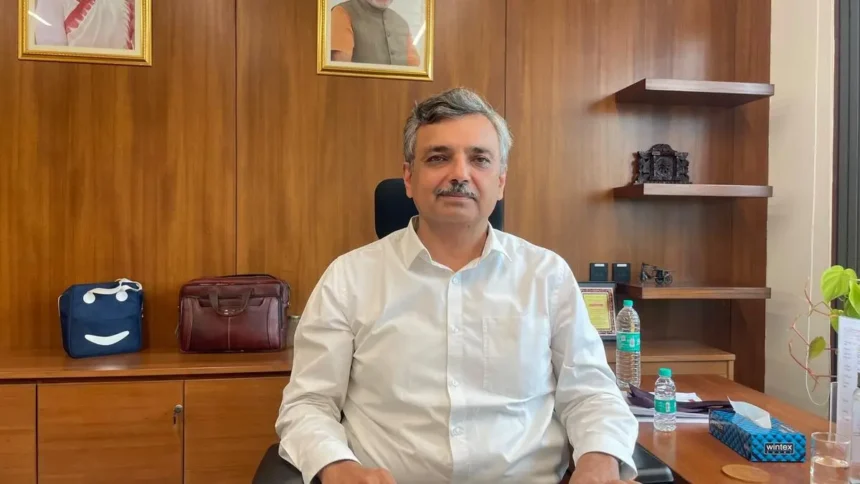
From implementation of revised schedule M norms to tighter regulatory oversight and efforts to improve manufacturing, Manoj Joshi, Secretary, Department of Pharmaceuticals, in an interview with businessline covered the government’s roadmap to strengthen India’s pharmaceutical sector amid concerns over drug quality, export scrutiny and rising medicine costs.
Joshi highlighted the industry’s long-term challenges, including building a robust biopharma ecosystem, reducing dependence on imported APIs and enhancing quality surveillance. Edited Excerpts:
Following concerns over substandard medicines and scrutiny of Indian drug exports, what reforms has the government undertaken to strengthen manufacturing quality and regulatory oversight?
The revised Schedule M became mandatory from January 1. Companies that do not comply with the revised WHO-GMP standards are being asked to shut down unless they are in the process of upgrading. Other measures include stricter regulation of exports, requiring regulatory No Objection Certificates (NOCs) for certain products not sold domestically. Revised Schedule M also prevents non-compliant companies from participating in government tenders.
Looking ahead, what do you see as the three biggest challenges for the Indian pharmaceutical industry over the next decade, and what policy interventions will be critical to ensure India remains the pharmacy of the world?
The first priority is building a strong ecosystem for biological drugs, including better regulation, start-ups and drug discovery. The second is reducing dependence on imported bulk drugs by strengthening the domestic value chain. The third is improving drug quality through stronger surveillance and regulatory action, particularly by state regulators.
There have been repeated concerns about rising prices of medicines outside the National List of Essential Medicines (NLEM). Is the government considering expanding price controls or introducing trade margin rationalisation for more drugs, particularly high-cost innovative drugs like cancer and rare disease medicines?
Prices of essential drugs are already regulated, and companies cannot increase prices by more than 10 per cent in a year. As for trade margin rationalisation, the issue is under consideration. There are concerns about exorbitant trade margins, especially on expensive medicines, which can encourage malpractices. The challenge is to find a balanced approach because limiting margins by percentage may create problems for cheaper drugs, particularly in rural areas where higher margins may be necessary.
What are the government’s thoughts on requests from the industry for price increases due to rising costs caused by war, packaging and insurance?
The government has asked the industry to provide detailed data on cost increases. The National Pharmaceutical Pricing Authority (NPPA) is examining requests supported by evidence, particularly where there have been significant increases in API prices. However, many companies have only made general requests without submitting adequate data.
The pharmaceutical industry argues that stricter price controls discourage investments in research and innovation. How is the government balancing affordable medicines with encouraging innovation?
These are separate issues. Around 80 per cent of medicines are already outside price control. The problem is that Indian companies generally do not invest enough in R&D. According to industry, investors and stock markets treat R&D spending as an expense rather than an investment, discouraging companies from investing more in innovation.
India still depends heavily on imports of active pharmaceutical ingredients (APIs). Has the Production Linked Incentive (PLI) scheme reduced this dependence, and what are the next priorities?
About 30–35 per cent of drugs still depend on imports from China, while 60–65 per cent have an entirely domestic value chain. Under the PLI scheme, production of key bulk drugs such as Penicillin G and clavulanic acid has started in India. The government intends to encourage more companies through incentives and protective measures so that domestic manufacturing expands further.
India is one of the world’s largest suppliers of generic medicines. What are the government’s targets for pharmaceutical exports over the next five years, and which markets offer the biggest opportunities?
The government does not set export targets for the industry. The United States remains the largest and most profitable pharmaceutical market, followed by Europe and Japan. Other important markets include Latin America, Africa and East Asia. Companies decide their own market strategies depending on their products.
Is the government encouraging manufacturers to supply medicines under the Jan Aushadhi scheme? Will more medical devices be included, and are there quality concerns?
Medicines under Jan Aushadhi are procured through a tender process, so there is no separate need to encourage manufacturers. The government purchases medicines and supplies them to retailers. There is a need to include more medical devices and some OTC products. Drug quality is generally not a major concern, but medical devices require greater vigilance because procurement is based on the lowest bidder (L1). If complaints arise, procurement from that supplier is stopped.
There have been complaints that some Jan Aushadhi outlets sell medicines carrying company branding instead of Jan Aushadhi branding. Is this acceptable?
No. Such practices are not allowed. Whenever complaints are received, action is taken. Given the large number of Jan Aushadhi outlets, isolated instances may occur, but they are acted upon.
Global demand for GLP-1 weight-loss drugs such as semaglutide has surged. What is India’s strategy for manufacturing these medicines domestically, and what are the concerns about misuse and counterfeit products?
From a manufacturing perspective, four or five companies are producing these medicines in India, while others import them or source them from domestic manufacturers. The health-related concerns regarding misuse should be addressed by the Health Department. Counterfeit drugs remain a major issue, and agencies such as CDSCO, state drug regulators and the police are taking continuous action against them.
Cell and gene therapies, biosimilars and precision medicines are growing rapidly worldwide. Is India’s regulatory framework and manufacturing ecosystem ready for these advanced therapies, and how can these expensive treatments be made more affordable?
The government has proposed a ₹10,000-crore biopharma mission aimed at strengthening biosimilar manufacturing, startups, contract research and manufacturing (CRDMOs), regulatory reforms, AI-driven drug discovery, venture funding and clinical trials. Advanced therapies are highly effective but remain expensive, especially while under patent. India must find ways to finance treatment for patients who cannot afford them. Competition after patents expire is expected to reduce prices.
Published on July 30, 2026