



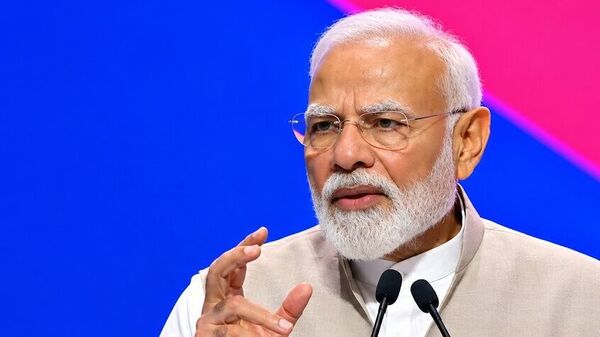
Prime Minister Narendra Modi on Tuesday called for the next phase of India’s fintech growth to move beyond the Unified Payments Interface (UPI) into areas such as credit, insurance, pensions and savings.
“In the fintech market, alongside payments, the share of credit transactions, insurance, savings and pension have to increase,” he said at the seventh edition of the Global Fintech Festival, adding that fintech can reach places traditional models can’t.
Modi also called for greater international integration of India’s digital payments infrastructure, arguing that the global expansion of UPI should increase beyond its current presence in several countries.
“UPI has reached many nations, but this is the first step. We have to join ourselves with the payment systems of those nations,” he said, pointing out that India had achieved this with Singapore. “We have to build this connection in various countries and markets,” he added. India should focus on countries with large Indian populations and significant trade volumes with the country, Modi said.
He added that linking payment systems could also reduce transaction costs for Indians working overseas and sending money home. “A part of that money goes into transaction costs. UPI can provide savings in this and bring money faster to Indians,” Modi said.
The prime minister also called for India to develop its own standards and frameworks for financial technology. “This system works on standards that were designed elsewhere,” he said, referring to the existing global financial system.
“We applied standards and rules made by others since we did not have a choice at that time. But now we have a choice, we can make our own standards and rules,” he said, adding that India should work towards linking these standards with the rest of the world.
Modi also said emerging technologies were creating new opportunities for the financial sector. “Technologies like agentic AI, quantum computing and tokenization are opening new doors in the financial sector. Now the challenge that lies in front of us is how to turn these opportunities into actual impact.”
For this, he said, cybersecurity and ethical data protection standards would be important. He also called for a strong regulatory framework to support innovation, and proposed a fintech consumer protection index that could enable transparent ratings of companies.
Modi said India’s growing risk-taking capacity was visible in the increasing participation of young people in the fintech ecosystem. He also pointed to India’s economic growth despite pressure on global energy markets, supply chains and trade.
The economy grew 7.8% in the June quarter, strengthening confidence in India, he said. He also highlighted an improvement in India’s sovereign rating by a Japanese credit rating agency as another indicator of global confidence in the country.