


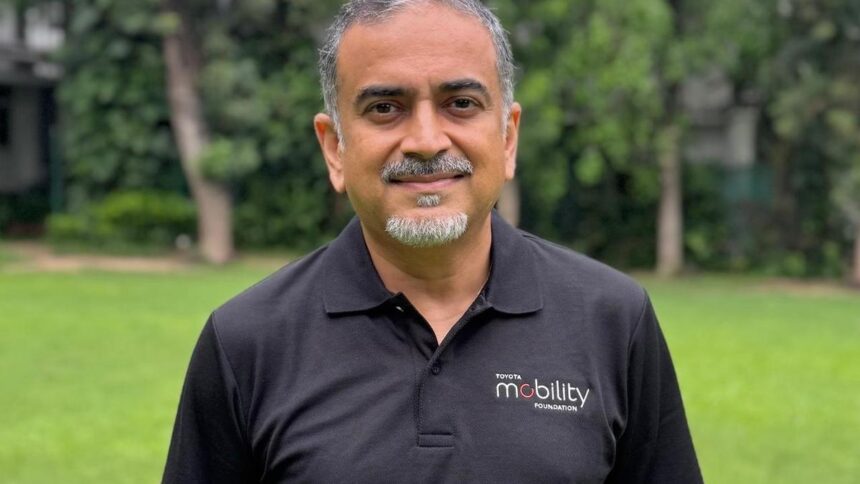
Auto major Toyota is not just making and selling cars but also contributing to making the quality of lives of people better, says Pras Ganesh, Executive Programme Director of Toyota Mobility Foundation (TMF). With this thinking, the Foundation is supporting an initiative by Varanasi Municipal Corporation to manage flow of millions of pilgrims, residents, and tourists. businessline caught up with Ganesh to find our more about the initiative, started in a challenge mode. Edited excerpts:
What is the idea behind this challenge?
In 2023, we launched a global challenge inviting cities around the world that had mobility related problems with a vision to solve them. Accordingly, we found 200 cities, from there we brought it down to 10 and then finally shortlisted it to three . These are Detroit in the US, Venice in Europe and Varanasi in Asia. We wanted to bring the best innovations from around the world, and to do that we did a challenge in order to find the best solutions, and then try to integrate it into the city. We needed to bring the right stakeholders around the table to be able to solve it.
What kind of funding you are going to provide? What kind of time duration they will have?
The full challenge is of $9 million, out of which $3 million is for the Varanasi project itself in different stages. In each stage we give a certain amount of money to the innovators, for example, the semi-finalists, the finalists, and then now to the winners. The winners are basically going to get, depending on the solution, a certain amount of money to be able to implement the solution for at least the next year, and then we will be able to see and test how good the solution is and how it can work together.
Was there any pilot project and what were the results?
Beta testing has been done and that is why we have selected the two winners and the two honourable mentions today. We have seen the potential of the solutions. Now we are trying to provide adequate funding at least for one year for them to be able to test it and trial it. Some we are doing little longer than a year as well, but that is the runway that we try to provide for them to be able to then see what works, what doesn’t work and then they can take it forward.
Beyond the funding period how will it work? What will be the role of city administration?
We are trying to show that it doesn’t have to only be based on public funding. It can also be a business model, for example. It can be a solution that can be sponsored by other people, or it can be a business model that works within the ecosystem of Varanasi. That’s also part of our solution because when many times we talk about sustainability and sustainable solutions, most important thing is not just the idea, it’s how to keep the solution going afterwards. Our whole point is to be able to bring the ideas, see how they work together, allow them to test it, give them some momentum and funding to start. And then from there, of course, we strongly support and we will continue to guide them for the next year. But from there onwards, it is up to them to try to take that forward and that is how we work for all our projects globally.
Why is Toyota taking up this project and what you are gaining from it?
Wherever Toyota operates, we try to contribute not just by making and selling cars, we try to contribute by making peoples’ quality of lives better. This is one of those kinds of projects. It is not a CSR project. We are involved from designing the project, we are involved in looking at the technology, we are involved in the business model support, we are involved in making the solution work. Our real job is to create the right environment for that solution to work.
Published on July 20, 2026