



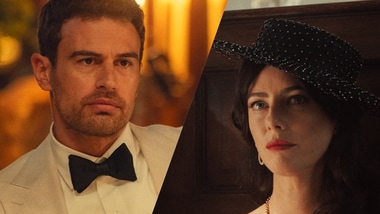
There is a noticeable difference in Eddie Horniman this time around. What is it, you ask? He is no longer standing at the edge of the Guy Ritchie’s world, looking for the quickest way out. He is ruling it and enjoying it.
Eddie has walked in, shut the door behind him and, alarmingly discovered that he quite likes it there.
that is the most enjoyable development in The Gentlemen Season 2. Theo James returns as Eddie with far less reluctance and considerably more . The former soldier and accidental duke has spent enough time around criminals to stop pretending that he is fundamentally different from them. The aristocratic manner remain. So do the beautifully cut suits – what has changed is the man wearing them.
It is quite a gorgeous development.
Eddie is now a crime boss and James looks entirely comfortable with that promotion.
The series picks up after the strange marriage of British aristocracy and organised crime that defined its first season. Eddie inherited the Halstead estate only to discover that his father’s land was tied to Bobby Glass’ sprawling operation. What began as an attempt to protect his family and get out of the business eventually turned into a partnership with Bobby’s daughter Susie Glass. By the end of the first, the two had become what Bobby accurately described as a “double act”.
Season 2 takes that partnership and gives it a lot of room. The business is bigger, the world is wider and Eddie and Susie are no longer dealing with the peculiar criminal ecosystem operating beneath an country estate.
Their ambitions and problems stretch beyond . New aristocrats, gangsters, political interests, and underworld figures enter the equation, while the show’s central characters are given considerably more territory in which to make increasingly questionable decisions.
And I think that is where Theo James becomes the show’s greatest advantages. He has always looked like he belongs in this universe. There is something about his ability to move between restraint and menace that works particularly well for Ritchie’s preferred collision of worlds.
One minute, Eddie is the polished Duke of Halstead, carrying generations of inherited British privilege in the cut of his throat. The next, he is discussing organised crime and drug distribution with calm efficiency of a man who has stopped being surprised by this world.
The suit remains crisp. But the attitude has changed completely.
James understands that Eddie should not suddenly become a cartoon gangster simply because he has accepted the criminal life. The fun lies in watching the aristocrat remain one while becoming increasingly dangerous. Eddie still carries himself like somebody who grew up believing there are rules. He has simply become far more comfortable deciding which rules apply to him and which ones don’t.
Guy Ritchie has spent much of his career returning to variations of the same fascination: Britain’s respectable world and its criminal underworld are not as separate as either separate as either side would like to believe. In The Gentlemen, that idea is made particularly literal. Aristocratic estates hide illegal operations, lords make political calculations, and criminals worry about appearances. Everybody has a title, a territory or an ego to protect.
It is also why the series is most enjoyable when it stops trying to disguise what it is. The plot occasionally moves through familiar Ritchie territory. Betrayals arrive. Alliances become inconvenient. A plan that appears straightforward turns out to have several hidden problems, most of them involving somebody with a gun or a terrible temperament. There are colourful criminals, increasingly elaborate power games and conversations that seem to be taking place one polite sentence away from violence.
At times, I found myself thinking that knows this world so well that it can occasionally feel as though it is rearranging furniture inside the same room.
But then it leans into the absurdity.
And that is when it becomes difficult to resist.
The heightened dialogue, the expensive surroundings, the ridiculous criminal logic and the peculiar British obsession with maintaining good manners while everything is falling apart are all part of the package. The show does not become more interesting when it tries to be less like Guy Ritchie. It becomes more interesting when it unapologetically becomes more like Guy Ritchie.
Then there is Daniel Ings. Freddy Horniman remains a gift.
He is useless. Frequently unbearable. Often selfish enough to qualify as a genuine prick. Yet Ings somehow makes Freddy enormously watchable. It is not simply that Freddy causes problems; practically everyone in this series does that. It is the particular confidence with which he causes them, followed by the apparent inability to understand why everyone else is suddenly furious.
Freddy has the energy of a man who could walk into a room, accidentally start a war and still believe he had made a helpful contribution.
Ings plays that beautifully. The character also remains an important counterweight to Eddie. Freddy represents the chaos Eddie once spent his time trying to contain. The irony, of course, is that Eddie’s growing has not made him morally superior. It has merely made him more effective. Season 2 increasingly understands that distinction.
Susie, meanwhile, continues to be far more than Eddie’s business partner standing beside him while the men make decisions. Kaya Scodelario gives the character the kind of control that makes every alliance feel temporary. Susie understands power. Eddie has learned it. That difference matters.
Their relationship works best when neither is entirely sure whether the other is an ally, competition or the beginning of a future problem. But it would be wonderful if something romantic happens between them. That chemistry and tension is undeniable.
That uncertainty becomes even more significant as the season pushes Eddie deeper into the consequences of the life he has chosen. His world has expanded, but expansion is never free in The Gentlemen. More territory means more people want a share of it. More power means more reasons for betrayal. And Eddie’s willingness to cross lines that once seemed unthinkable gradually changes the man at the centre of the story.
Ultimately, Season 2 does not reinvent Guy Ritchie’s formula.
It sharpens it, stretches it and occasionally throws more people into it.There are moments when the familiarity shows. The story can feel like a well-dressed return to a playground Ritchie has visited many times before.
Still, there is something satisfying about watching The Gentlemen embrace that identity rather than run from it.
Theo James, especially, seems to be having a far better time now that Eddie has stopped pretending he does not belong in this world.
The reluctant crime boss is gone. The dangerous aristocrat who enjoys being one has finally arrived.