



A fresh survey by LocalCircles has found a sharp increase in complaints from owners of older petrol vehicles about falling fuel efficiency and rising maintenance costs following the nationwide rollout of The findings come as the Central Government recently told the Supreme Court that the ethanol blending programme remains an ongoing “experiment”, with its full impact expected to become clear only by 2027.
The survey, conducted in June 2026, gathered responses from more than 44,000 owners of petrol vehicles purchased in 2022 or earlier across 305 districts. It found that the proportion of respondents reporting a drop in fuel efficiency of more than 10% rose from 45% in May to 66% in June. At the same time, those reporting unusual wear and tear or increased repair requirements almost doubled from 29% to 55% within a month.
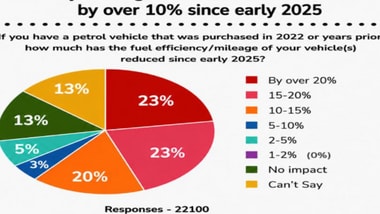
According to the survey, 66% of owners said their vehicle’s mileage had reduced by more than 10% since early 2025. Of these, 23% reported a decline of more than 20%, another 23% reported a 15-20% drop, and 20% reported a 10-15% drop. Only 13% said they had noticed no impact.
LocalCircles said the month-on-month rise suggests that “the adverse mileage impact of n older vehicles is intensifying with sustained usage rather than easing.”
The report explained that ethanol contains significantly less energy per litre than petrol. Older vehicles, which were originally designed for E5 or E10 fuel, lack the engine calibration and adaptive systems found in newer E20-compatible models. As a result, they may consume more fuel to maintain the same performance, resulting in lower mileage.
The survey also found growing concerns over vehicle durability. More than half (55%) of respondents said they had experienced an unusual increase in wear and tear or repair requirements since early 2025. Around 24% described the increase as major, 21% as moderate, and 10% as slight.
LocalCircles noted that this represents a 90% month-on-month jump in reported wear and tear, raising concerns that older vehicles could require costly repairs well before the end of their expected 15-year lifespan.
The report said ethanol’s ability to absorb moisture may contribute to corrosion in fuel tanks, fuel lines and injectors. It also noted that ethanol can affect rubber and plastic components, such as seals, hoses, and gaskets in vehicles that were not originally designed for higher ethanol blends, potentially leading to leaks and component failures over time.
The findings come despite repeated assurances from the Government that E20 fuel is scientifically validated and continuously monitored. The Ministry of Petroleum and Natural Gas has said it has not received reports of widespread engine failures linked to ethanol-blended petrol and dismissed viral claims, including videos suggesting ants are attracted to E20 fuel, as misinformation.
While LocalCircles agreed that misleading social media content should not be confused with real-world evidence, it said its survey reflects the “first-hand, on-road experience” of owners of older petrol vehicles, highlighting growing concerns over fuel efficiency and maintenance costs as the E20 rollout continues.