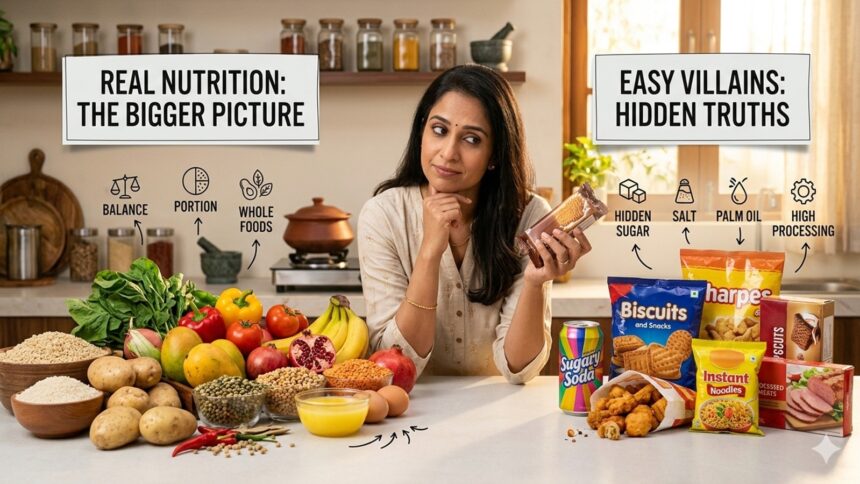
Cookbook author Krish Ashok recently brought to light an interesting behavioural pattern Indians tend to exhibit when it comes to “healthy” and “unhealthy” food. Chatting with gastroenterologist Dr Pal Manickam on his podcast The Gut Feeling, he shared: “When they see something oily, they feel it’s oily and say, ‘Okay, I’ve avoided this now’. But you never intuitively think a biscuit is oily now. Biscuit is just a lot of fat, and it’s usually saturated fat because it’ll be palm oil,” he said, sharing a cultural observation that “we like easy villains”.
Edwina Raj, Head of Services – Clinical Nutrition & Dietetics, Aster CMI Hospital, , says Krish Ashok is right in saying that people often look for “easy villains” in food because it is simpler to blame one ingredient than understand the full picture of nutrition.
DISCLAIMER: This article is based on information from the public domain and/or the experts we spoke to. Always consult your health practitioner before starting any routine.
“Foods like rice, potatoes, ghee, eggs, or mangoes are often unfairly blamed for weight gain, diabetes, or poor health, even though these foods can be healthy when eaten in the right quantity and balance,” she tells indianexpress.com.
Many spread through social media, diet trends, and incomplete information, which makes people fear traditional foods that have been part of Indian diets for generations.
However, Raj says the real problem is often not a single food but the overall eating pattern and lifestyle.
“Ultra-processed foods are usually more harmful than natural foods because they contain high amounts of sugar, salt, unhealthy fats, preservatives, and artificial ingredients,” she elaborates, warning us to be careful of packaged snacks, sugary drinks, instant noodles, processed meats, bakery products, and deep-fried fast foods instead.
Why? Because these are “designed to taste addictive and can increase the risk of obesity, diabetes, heart disease, fatty liver, and inflammation” when consumed regularly.
Another hidden issue is portion size, which according to Raj, can turn even healthy foods unhealthy if eaten in excess. “Lack of sleep, stress, low physical activity, smoking, and alcohol also play a major role in lifestyle diseases, but people often ignore these factors and focus only on one “bad” food,” she says.
Instead of fearing individual foods, Raj says that people should focus on eating more home-cooked meals, fruits, vegetables, whole grains, nuts, pulses, and balanced proteins, while reducing highly processed foods and sugary beverages. A balanced diet and healthy lifestyle matter more than blaming one food item.
DISCLAIMER: This article is based on information from the public domain and/or the experts we spoke to. Always consult your health practitioner before starting any routine.