Throughout history, certain cities rose far beyond ordinary urban centres. They became capitals of empires, hubs of global trade, cultural powerhouses, and symbols of unmatched influence. Yet even the mightiest cities eventually faced decline. Some were destroyed by invasions, others weakened by political decay, disease, environmental collapse, or changing trade routes.
Here are five cities that once ruled the world, and the reasons they ultimately fell from power.
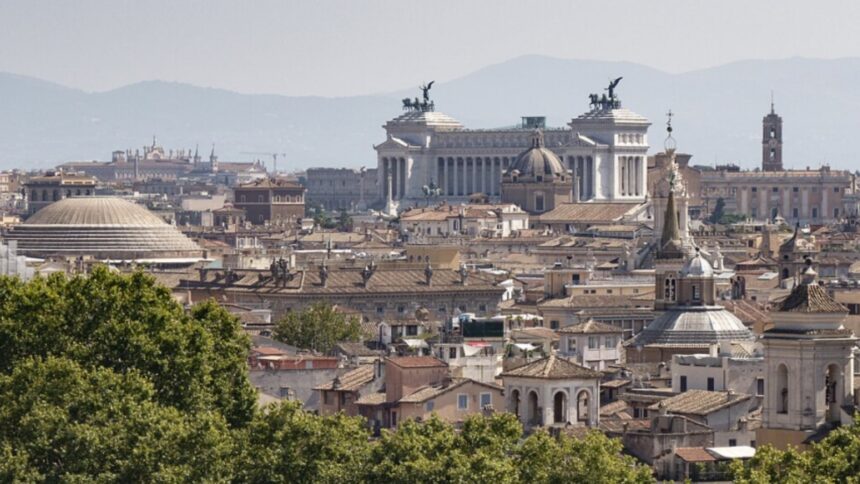
At its peak, Rome controlled one of the largest empires in human history, stretching across Europe, North Africa, and parts of Asia. Known for its military strength, engineering marvels, and political influence, ancient Rome shaped law,
But Rome’s dominance slowly weakened due to internal corruption, political instability, economic troubles, and repeated invasions by barbarian tribes. The fall of the Western Roman Empire in 476 CE marked the symbolic collapse of one of history’s greatest powers. Even after its political decline, Rome remained culturally and religiously influential through the rise of the Catholic Church.
Babylon was once among the richest and most advanced cities in the ancient world. Located in Mesopotamia, it became famous for monumental architecture, astronomical knowledge, and the legendary Hanging Gardens, one of the Seven Wonders of the Ancient World.
The city flourished under King Nebuchadnezzar II, but later suffered repeated conquests by Persian rulers and a decline in regional influence. Over time, trade routes shifted, populations dwindled, and Babylon gradually faded into ruin. Today, its remains stand as a reminder of one of humanity’s earliest urban civilisations.
Strategically positioned between Europe and Asia, Constantinople served as the heart of the Byzantine Empire for over a thousand years. The city controlled crucial trade routes connecting East and West and became a centre of wealth, religion, and military power.
Despite its strong fortifications, Constantinople faced centuries of pressure from rival powers. In 1453, the Ottoman Empire captured the city after a historic siege, marking the end of the Byzantine Empire. Renamed Istanbul, the city continued to thrive under Ottoman rule, though its role as the
Built on an island in Lake Texcoco, Tenochtitlan was the magnificent capital of the Aztec Empire. With advanced canals, markets, temples, and urban planning, it was among the largest cities in the world during the 15th century.
Its downfall came rapidly after the arrival of Spanish conquistador Hernán Cortés in 1519. Combined with European diseases such as smallpox, military conflict, and alliances between the Spanish and rival Indigenous groups, the Aztec capital eventually collapsed in 1521. Modern-day Mexico City now stands atop the ruins of Tenochtitlan.
While Machu Picchu itself was more of a royal estate than a political capital, Cusco served as the powerful centre of the Inca Empire. The Incas built vast road systems, agricultural terraces, and monumental stone architecture across South America.
The empire weakened due to civil war and the arrival of Spanish conquistadors led by Francisco Pizarro. European diseases had already devastated local populations before large-scale battles even began. Cusco lost its imperial dominance under colonial rule, while Machu Picchu remained hidden from the outside world for centuries before becoming one of the world’s most famous archaeological sites.