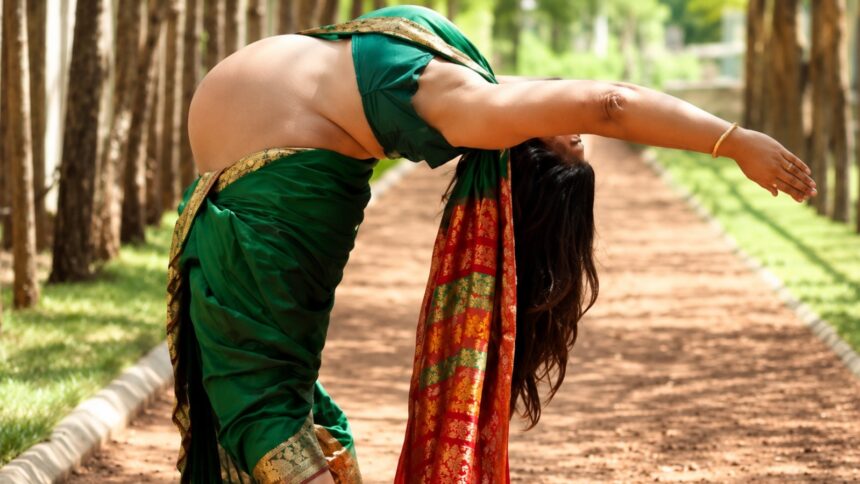
A video showing a 39-week pregnant woman performing advanced yoga poses, including a headstand, has sparked mixed reactions online. “39 weeks. 9 months. This is how I am living this chapter,” the text on the now-viral video reads. While many netizens praised her flexibility and strength, others questioned whether such intense movements are safe so close to delivery.
According to Dr Archana Dhawan Bajaj, Gynaecologist and IVF Expert at Nurture IVF Clinic, advanced yoga poses and inversions in the final weeks of pregnancy are not suitable for everyone and can carry risks, even for women who have practised yoga for years.
“Some of the yoga asanas are not suitable at the 39th week of pregnancy, even for those women who have been practising yoga for years,” says Dr Bajaj.
“The body experiences a lot of changes during the last weeks, such as loss of balance, joint laxity and shifting of the centre of gravity. As a result of these changes, a woman may be at risk for falling and injuring
She explains that even a seemingly minor fall during late pregnancy can pose unnecessary risks.
“Trauma from a fall is an unnecessary risk for a healthy baby, but it can occur within the uterus. At this stage, the emphasis should be on comfort, circulation, breathing and preparing for birth, not on physical accomplishments.”
Instead of challenging inversions and balance-focused poses, Dr Bajaj recommends prenatal yoga, gentle stretching and relaxation techniques to help prepare the body for labour.
But Why?
Maybe others see strength & flexibility. I see a woman at 39 weeks choosing content over caution.
— Shilpa Godbole (@godbole_shilpa)
“The last few weeks of pregnancy can be stressful if there are any inversions or strong stretching, as the body is already under a lot of stress,” says Dr Bajaj.
She notes that pregnancy hormones naturally loosen ligaments and increase joint flexibility, which can make deep stretches risky.
“Deep stretches can overstretch ligaments, as the hormones of pregnancy make the joints more flexible and can cause muscle strains or even pelvic instability.”
Inversions can also lead to other concerns. “Inversions can make people dizzy, uncomfortable, lose their balance or have their blood pressure fluctuate,” she explains.
When it comes to safety, it is very much personal, says Dr Bajaj.
“For a woman who has been using inversions regularly prior to pregnancy, who does not have medical issues, and who has been approved by her obstetric care provider, inversions or modified inversions can sometimes be continued with care and expertise.”
However, she stresses that even experienced practitioners should proceed carefully. “The last few weeks are typically a time to focus on stability, mindful movements and energy conservation, and not on trying to do too much.”
“The ninth month’s principle guide is how the body feels during and after movement,” says Dr Bajaj. She advises stopping exercise immediately if it causes pain or unusual symptoms.
“If an exercise causes pain, dizziness, breathlessness, contractions,
One simple guideline can help determine whether an activity is appropriate. “A woman should be able to have a normal conversation while exercising during pregnancy. The movements need to be supportive and not strenuous,” she explains.
According to Dr Bajaj, some of the safest forms of exercise during the ninth month include: