



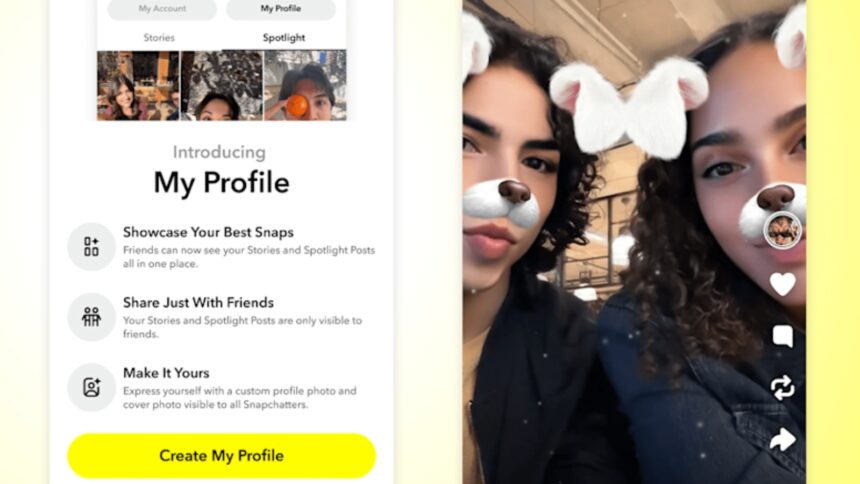
Snapchat has announced a new privacy-focused content-sharing experience for users aged 13 to 15, allowing them to create, save and showcase Stories and Spotlight videos on dedicated profiles that are visible only to manually accepted friends.
The update is beginning to roll out globally, marking a shift in how younger teens can share content on the platform. Previously, users under 16 could contribute videos to Snapchat’s short-form video platform, Spotlight, but their content was shared without attribution to their profiles. Now, Snapchatters in this age group will have their own profiles to display content, while their posts will no longer be distributed to audiences beyond their friends’ network.
According to , the change is aimed at encouraging creativity and self-expression within a more private environment. The new experience includes friends-only visibility, meaning content can be viewed by mutually accepted friends rather than followers or the broader Snapchat community. In addition, users under 16 will not see public engagement metrics such as favourite counts on their content.
The company said the feature is part of its age-appropriate design approach and introduces sharing in stages based on users’ ages. While users aged 13 to 15 will be limited to a friends-only sharing environment, those aged 16 to 17 will have access to optional public sharing features with additional safeguards, limited distribution and parental visibility tools. Users aged 18 and above will continue to have full access to public profiles and broader content distribution features.
Snap also highlighted a range of existing safety measures available for users under 18. These include stricter default privacy settings, protections against unwanted contact from unknown users, warnings when teens interact with accounts they may not know, and a moderated public content experience designed to limit exposure to inappropriate material.
Additionally, the platform’s Family Centre parental controls allow caregivers to view their teen’s friends list and recent contacts, set content restrictions, disable access to the My AI chatbot, share location information and report potentially concerning accounts.
The company said the latest update is intended to keep younger teens’ online interactions centred on real-life friendships while providing a safer space for creativity and self-expression.
(This article has been curated by Shivani P Menon, who is an intern with The Indian Express)

