



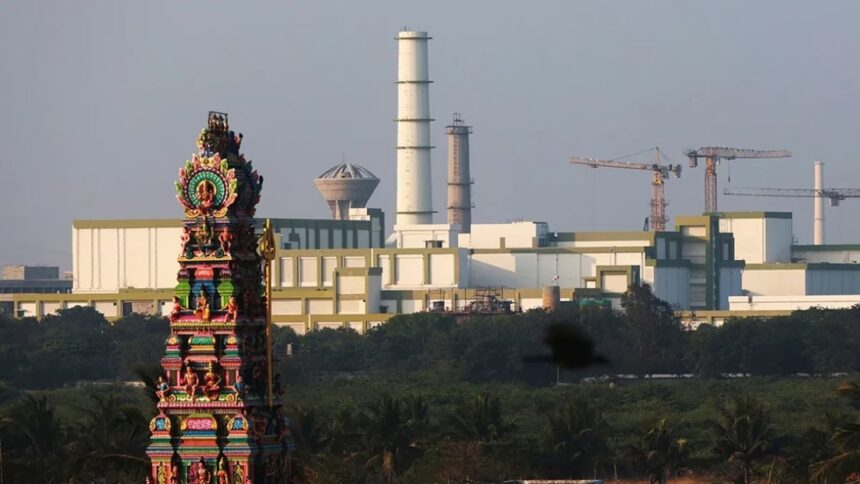
India is believed to have slightly expanded its nuclear stockpile in 2025 and continued developing new types of nuclear delivery systems, while Pakistan’s focus has been on new delivery systems and in 2025, according to a new report released by the on Monday.
According to the report, at the start of 2026, nine countries — the United States, Russia, the United Kingdom, France, China, India, Pakistan, North Korea and Israel — together possessed approximately 12,187 nuclear weapons, of which 9,745 were in military stockpiles and considered potentially operationally available.
“Nearly all of these warheads belonged to Russia or the USA, and to a lesser extent France and the UK, but China and India may now occasionally deploy a small number of warheads mounted on missiles during peacetime,” it said.
In recent years, submarine-based nuclear weapon delivery systems have also been proliferating, especially in the four nuclear-armed States in the Indo-Pacific.
The report further stated that India has deployed 12 nuclear warheads at present, and the country’s total nuclear stockpile is estimated at around 190 warheads as of January 2026, up from 180 a year ago.
“It has long been assumed that India stores its nuclear warheads separately from its deployed launchers during peacetime. However, the country’s recent moves towards placing missiles in canisters and conducting suggest that India could be shifting in the direction of mating some of its warheads with their launchers in peacetime,” it said.
“Based on this assessment, SIPRI estimates that, as of January 2026, India may have started to deploy a small number of nuclear warheads on a single SSBN conducting occasional deterrence patrols,” the report noted.
About Pakistan, the report said its nuclear warhead stockpile is thought to have remained stable at around 170 warheads as of January 2026, although it continued to develop its nascent nuclear triad during 2025.
“While Pakistan’s land and air capabilities are well established, its sea-based capabilities are still in the development and testing phase,” it said.
The report notes that China is also in the middle of a significant modernisation and expansion of its nuclear arsenal, which is estimated to have increased from 600 to up to 620 warheads during the year. It also said China may now be deploying warheads on missiles of a few mobile battalions during peacetime exercises, which would mark a change from China’s longstanding policy of keeping warheads and missiles de-mated.
The modernisation and further deployment of nuclear weapons raise potential risks related to nuclear escalation. “Two of the most destabilising developments are nuclear–conventional entanglement — the increasing overlap between dual-capable nuclear and non-nuclear (conventional) military capabilities, especially missiles — and the proliferation of,” the report noted.
It said India’s modernisation programme is increasingly focused on developing long-range weapons capable of reaching targets throughout China, “but its planning remains heavily influenced by its long-standing rivalry with Pakistan”.

