



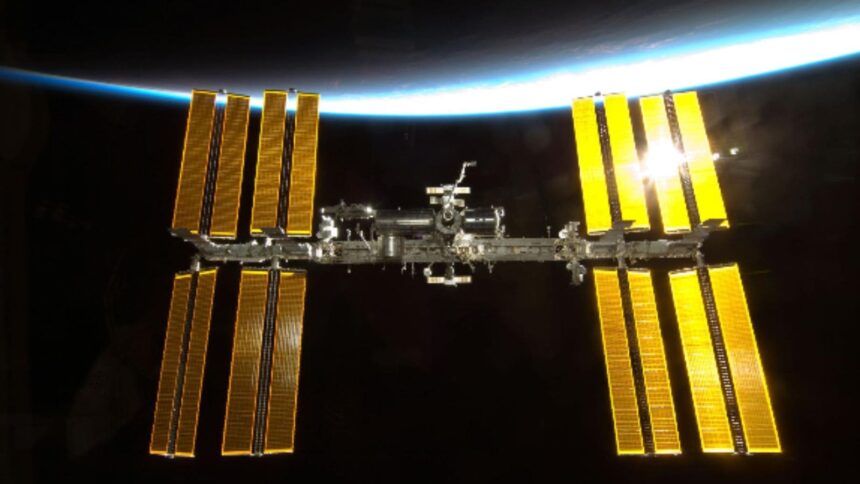
NASA, on Friday, June 5, directed astronauts aboard the International Space Station () to take shelter inside a docked spacecraft as Russian engineers prepared to investigate an air leak in the Russian segment of the orbiting laboratory.
The precautionary directive came after Russia’s space agency said that it was considering carrying out repair work on a section of the ISS that has been a source of air leaks for several years. NASA said the proposed repair involved cutting a bracket to gain better access to a suspected leak location, a step that could have posed additional structural risks.
As a result, instructed astronauts to board a SpaceX Crew Dragon spacecraft and prepare for a potential emergency evacuation if necessary.
The astronauts who sheltered in the capsule included NASA astronauts Jessica Meir, Jack Hathaway and Chris Williams, European Space Agency astronaut Sophie Adenot, and Roscosmos cosmonaut Andrey Fedyaev. Two Russian cosmonauts remained on the station while repair activities were being evaluated.
The emergency measure was short-lived. Roscosmos later paused the planned repair operation to conduct further analysis and collect additional data. Following the decision, NASA lifted the shelter-in-place order and confirmed it supported the revised approach.
The issue centres on a transfer tunnel known as PrK, which connects the Russian-operated Zvezda service module to a docking port. Air leaks were first detected in the area in 2019 and have remained a recurring concern for both NASA and Roscosmos.
NASA spokesperson Bethany Stevens said on X that the transfer tunnel has experienced recurring issues due to cracks and air leaks and that Roscosmos has been working for years to mitigate the problem. Stevens said both agencies have been trying to determine the root cause of the cracks, while Russian specialists have relied on operational measures and periodic repair efforts to limit air loss.
“We continue to work with our Russian counterparts, along with the rest of the international community that supports the space station, to arrive at a more permanent resolution,” Stevens wrote.
Following Roscosmos’ decision to gather additional data before proceeding, NASA ended the safe-haven procedures and instructed crew members to return to normal operations aboard the ISS, Stevens added.
The incident underscores the challenges facing the ageing ISS, which has been continuously occupied since 2000. NASA plans to operate the station until at least 2030, but concerns over ageing hardware, recurring maintenance issues and Russia’s long-term role in the programme continue to draw scrutiny.
Despite the latest incident, NASA and Roscosmos said the leak does not pose an immediate threat to crew safety. Engineers from both agencies are continuing to assess the affected area and evaluate options for a more permanent repair.

