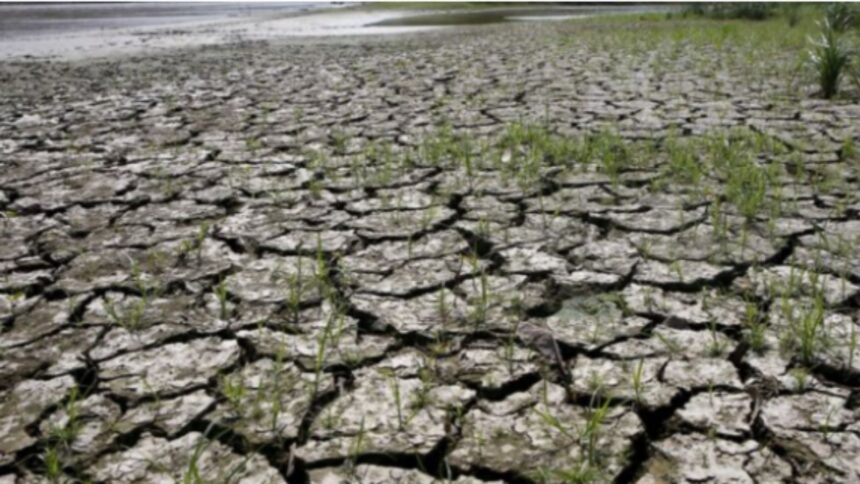
As several parts of India continue to reel under extreme heat, the could develop in the coming months, raising concerns over higher temperatures, erratic rainfall and stress on food and water systems.
The World Meteorological Organization (WMO) said unusually warm ocean temperatures in the Pacific are driving the development of El Niño conditions. The agency forecast above-average global temperatures between June and August, with the impact likely to continue through November.
“The year 2027 is very likely at this point to be the world’s warmest year on record,” climate scientist Zeke Hausfather of Berkeley Earth told the BBC.
According to the WMO, El Niño is a periodic warming of sea surface temperatures in the central and eastern Pacific Ocean. The phenomenon typically lasts between nine and 12 months and can significantly influence global weather patterns.
The term “El Niño”, Spanish for “Christ child”, was originally used by fisherfolk along the coasts of Ecuador and Peru to describe a warm ocean current that usually appeared around .
El Niño events are often associated with extreme weather conditions, including heatwaves, droughts and heavy rainfall in different parts of the world.
El Niño has historically been linked to weaker monsoons and hotter summers in India, although the impact varies from year to year.
According to the India Meteorological Department (IMD), the last four decades have been significantly warmer than previous periods since 1850. Citing the Intergovernmental Panel on Climate Change (IPCC) report of 2021, the IMD said global surface temperatures between 2011 and 2020 were around 1.09 degrees Celsius higher than during 1850-1900.
The IMD has also noted that heatwaves have become more frequent and intense across many regions since the 1950s.
In India, the annual mean surface temperature showed a warming trend of around 0.62 degrees Celsius per 100 years between 1901 and 2020, according to IMD data.
One of the strongest . Climate scientists have often cited it as an example of how El Niño can amplify extreme heat.
“If that happened today, it would be an incredibly cold year compared to the last two decades,” Hausfather told the BBC, pointing to the long-term effects of human-driven climate change.
Research on El Niño-related health hazards in India has linked the 1998 event to severe heatwaves, shifts in rainfall patterns and outbreaks of diseases such as malaria.
The heatwave reportedly caused more than 2,600 deaths across India.
Scientists have long studied the relationship between El Niño and monsoon failures in India.
A research paper by RH Kripalani and Ashwini Kulkarni of the Indian Institute of Tropical Meteorology (IITM), , noted that several major drought years in India coincided with strong El Niño events.
However, researchers have also pointed out that not every strong El Niño results in severe drought conditions over India, indicating that multiple climate factors influence the monsoon.
Authorities and weather experts advise people to remain cautious during periods of extreme heat and heavy rainfall.