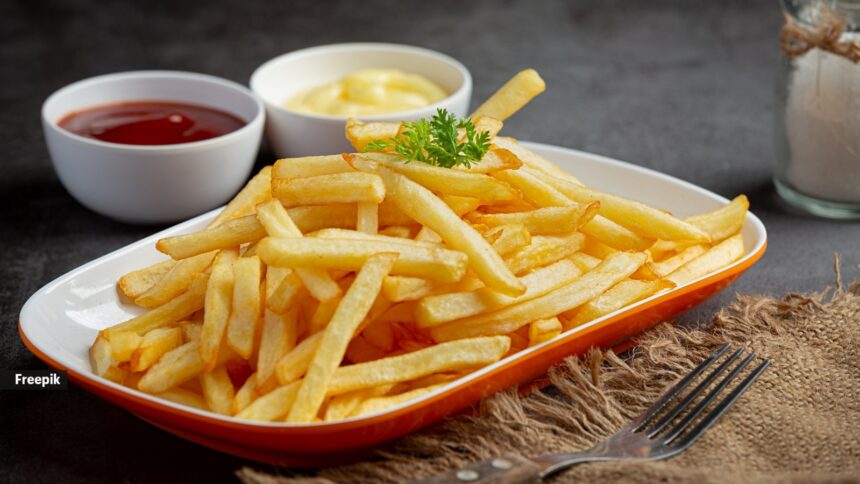
Few foods are as universally loved as a plate of hot, crispy French fries. You can enjoy them while binge-watching, in a pretty cafe, while travelling, or even at your work desk. They are a perfect mix of crunchiness and mushiness, with a dash of salt.
But have you ever noticed how the fries you try to make at home are almost never as crunchy as the ones you buy at the restaurant? It’s the same potatoes, oil, and salt, yet you end up with a soggier, lumpier version.
We decided to solve the mystery and reached out to three chefs for the culinary secret. Turns out, the difference lies in technique and a few easily missed details.
DISCLAIMER:
Celebrity Chef Gautam Kumar, popular for his sustainable cuisine recipes, notes that potatoes with a “higher starch content” become crisp on the outside and soft on the inside.
Using waxy or low-starch potatoes, the chef explains, puts you at a disadvantage, as they retain more moisture and don’t crisp as well.
“Making a random choice of potatoes leads to fries losing their structural integrity because of an inappropriate starch-to-water ratio,” Chef Rishita Bhalla, from CYK Hospitalities, tells indianexpress.com, while recommending “russet potatoes” for best results.
“Once the fries come out of the 140°C cooking, they need to be dropped back in oil at 180°C to 190°C,” says Chef Ranjan Majumdar, Executive Chef of Mayfair Spring Valley Resort, .
When freshly cut potatoes go straight into oil, that moisture turns into steam. Instead of forming a crust, the fries soften and can even turn mushy.
“The main reason behind homemade fries not hitting that crispiness is too much moisture content in the potatoes,” Chef Bhalla notes.
That’s why chefs insist on two crucial steps:
“Any moisture will prevent them from becoming crisp,” Chef Gautam says.
One of the biggest differences between home kitchens and restaurants is the cooking method.
“The difference between soggy home fries and shatteringly crisp restaurant fries comes down to technique,” says Chef Majumdar.
Instead of frying once, professionals use a two-step process:
Chef Bhalla explains, “The second stage gives rapid, intense browning and a perfect, brittle crisp on the outside.”
Adding too many fries at once drops the oil temperature, preventing proper frying.
A common mistake made at home is overcrowding the pan, filling it beyond 50 per cent of its capacity, as Chef Majumdar points out. He adds that this causes the fries to “” rather than crisp up, resulting in greasy, soft potatoes.
Restaurants avoid this by frying in small batches and using equipment that maintains stable, high heat.
“Home-style one-stage frying at a constant temperature from start to finish is a trap, which makes the fries dark with a burnt exterior, and dense & raw inside, which is simply not edible,” Chef Bhalla adds.
Small details that make a big difference
A few overlooked habits can also affect the final result:
Some restaurants even freeze fries after the first fry, which helps create an even crunchier exterior later.
“To get restaurant-style fries at home, soak cut potatoes, double-fry (blanch at 150°C, then crisp at 190°C), and don’t overcrowd the pan. Salt immediately after frying for best results,” Chef Majumdar sums up.
DISCLAIMER: