



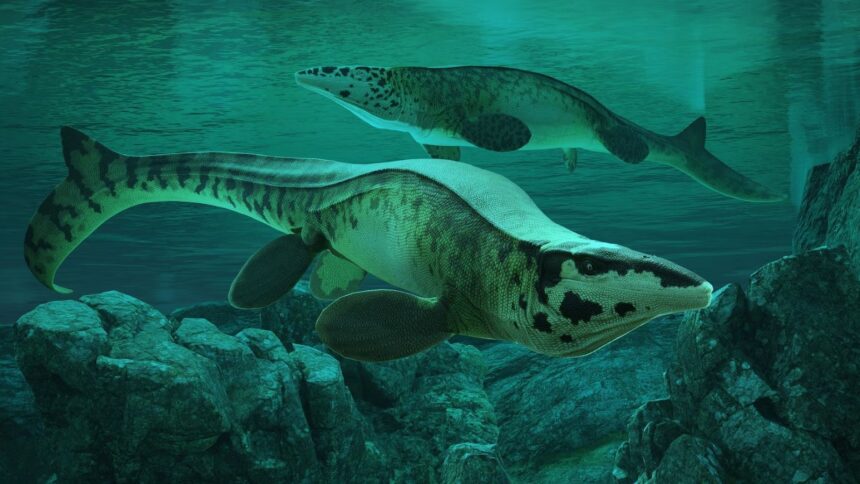
Scientists have identified a new species of gigantic prehistoric marine reptile called Tylosaurus rex, a fearsome ocean predator that researchers say rivalled the famous Tyrannosaurus rex in both size and dominance during the age of dinosaurs.
The newly classified species lived around 80 million years ago during the Cretaceous Period in the vast Western Interior Seaway, an ancient inland ocean that once divided North America into two landmasses.
Researchers identified Tylosaurus rex as a distinct species after conducting a large-scale review of previously discovered mosasaur fossils. The study, published in the American Museum of Natural History’s scientific bulletin, found that the marine reptile possessed several unique anatomical features that separated it from other known tylosaur species.
According to the researchers, Tylosaurus rex had finely serrated teeth designed for slicing flesh, powerful jaw and neck muscles for subduing large prey, and a massive streamlined body built for hunting in open water.
The predator belonged to a group of giant marine reptiles known as mosasaurs, which evolved from land-dwelling lizards before becoming apex predators of the prehistoric oceans.
The largest known Tylosaurus rex specimen, nicknamed ‘Bunker’, measures roughly 43 feet (13.2 metres) long, slightly larger than the biggest known Tyrannosaurus rex specimen, ‘Sue’, which measures around 40.5 feet (12.3 metres).
Researchers said the giant reptile would have resembled an enormous marine version of today’s Komodo dragon, though far larger and more aggressive.
Lead researcher Amelia Zietlow from the History Museum at the Castle in Wisconsin noted that the skull of the giant reptile alone was as tall as she is.
Scientists believe Tylosaurus rex preyed on large fish, marine reptiles, and virtually any animal it could overpower in the ancient sea. Its combination of immense size, strong musculature, and cutting teeth likely made it one of the most dominant marine predators of its time.
Most fossils associated with the species were discovered in Texas, while the best-preserved specimen came from Kansas. Researchers said the species name ‘rex’, meaning king, was chosen as a tribute to Tyrannosaurus rex because of the animal’s similar role as a top predator.
Although the two species, researchers said, never lived at the same time, both species occupied comparable positions as apex hunters in their respective environments: one ruling the land and the other dominating the sea.

