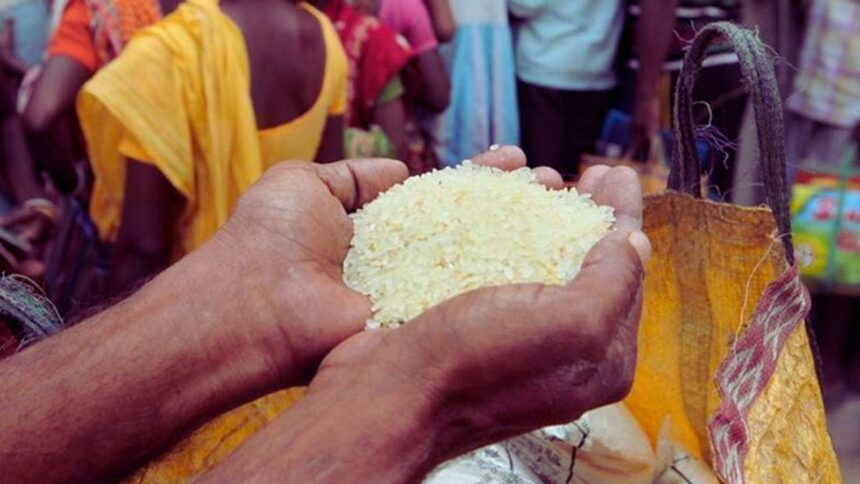
The Union Cabinet on Wednesday approved the continuation of the SARTHAK-PDS programme for another five years, with a total allocation of Rs 25,530 crore up to March 2031. The step comes at a time when the Centre is looking to deepen technology-driven reforms in the public distribution system across the country.
The decision was taken by the Cabinet Committee on Economic Affairs (CCEA) chaired by . Modi took to X later and said, “Our government is committed to ensuring that foodgrains reach every needy person in the country on time through the PDS. In this direction, a decision has been taken to continue making the PDS more modern and effective. This will make the delivery, logistics, and transportation arrangements under the PDS more transparent and efficient, while also speeding up the resolution of complaints.”
देश के हर जरूरतमंद तक पीडीएस के माध्यम से समय पर खाद्यान्न पहुंचे, इसके लिए हमारी सरकार प्रतिबद्ध है। इसी दिशा में सार्थक पीडीएस को ज्यादा आधुनिक और प्रभावी बनाकर जारी रखने का फैसला किया गया है। इससे पीडीएस से होने वाली डिलिवरी, लॉजिस्टिक्स और ट्रांसपोर्टेशन व्यवस्था अधिक…
— Narendra Modi (@narendramodi)
The Cabinet has also approved revised norms for Central assistance to states and union territories towards intra-state transportation and handling of foodgrains. It has also revised the norms of margins for fair price shop (FPS) dealers, while keeping the existing funding structure unchanged.
Under the new SARTHAK-PDS framework, two existing schemes — financial support for intra-state movement of foodgrains and FPS dealer margins under the National Food Security Act (NFSA), and the focused on technology reforms — have been merged. By merging the two initiatives, the government aims to create a single administrative structure for improving foodgrain distribution and strengthening implementation of the NFSA.
Addressing reporters after the Cabinet meeting, Information and Broadcasting Minister Ashwini Vaishnaw said the approved scheme covers every stage of the public distribution network, from identifying beneficiaries to transporting foodgrains and gathering citizen feedback.
Cabinet Briefing by Union Minister
— Ministry of Information and Broadcasting (@MIB_India)
“Right from selection of beneficiaries to movement of foodgrains, to getting proactive feedback from citizens, to reducing transportation distance — all those activities have been approved with an outlay of Rs 25,530 crore for five years,” Vaishnaw said, according to a PTI report.
He said several state governments had been struggling to meet the cost of transporting foodgrains to ration shops and added that the new scheme would support those expenses while also improving remuneration for FPS dealers.
The government said the scheme is intended to modernise the existing public distribution system instead of replacing it. The reforms are expected to address issues linked to logistics, handling of foodgrains, transportation efficiency and grievance redressal mechanisms.
SARTHAK-PDS has been structured around two objectives — ensuring continuous financial support for foodgrain movement and dealer margins, while building an integrated and citizen-oriented PDS network with interoperable systems across states and union territories.
The Centre said the proposed reforms are aimed at improving last-mile delivery of subsidised foodgrains and reducing leakages within the distribution chain.
A major component of the scheme involves the use of advanced technologies such as Machine Learning (ML), Natural Language Processing (NLP) and Blockchain to streamline operations in the public distribution system.
Under the approved plan, the government intends to create unified databases and standardised digital architecture for real-time monitoring of the PDS network. The scheme also proposes AI-enabled analytics and grievance redressal systems along with State Command Control Centres for monitoring operations through data-based oversight.
According to the government, ISO-certified process frameworks will be introduced to strengthen transparency, security standards and operational sustainability within the system.
The government said the programme is linked to its commitment under the National Food Security Act, which currently covers 81.35 crore beneficiaries.
“The government has a commitment to the people of the nation — a dignified life by ensuring access to food and nutritional security through the availability of adequate quantities of quality foodgrains,” the government said in a statement quoted by PTI.