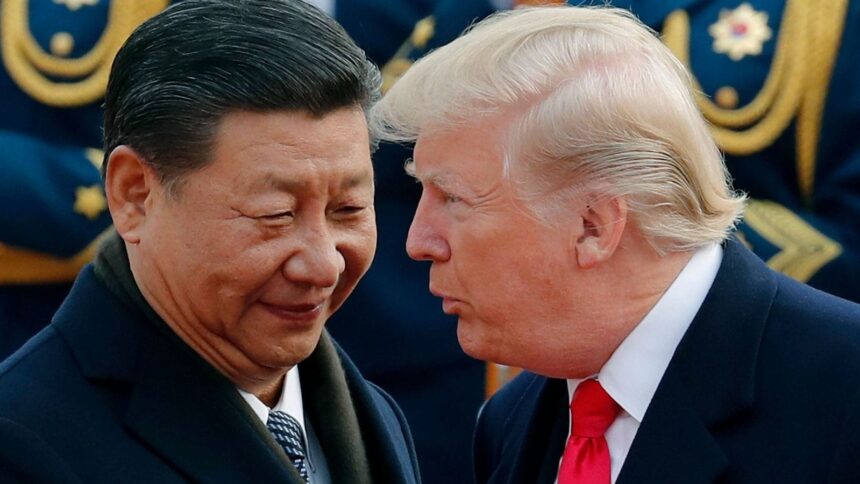
US President Donald Trump returned from Beijing projecting progress after his summit with Chinese President Xi Jinping. But several of Trump’s closest advisers believe China may attack Taiwan in the next five years to achieve its goal of “unifying” the island nation with the mainland, American news website Axios reported.
And why is this of ? Answer: chips or semiconductors that power everything from artificial intelligence data centres, smartphones and cars to MRI and washing machines. If China takes over Taiwan in the near future, US companies will lose access to these precious chips.
The concerns emerged after during the closed-door talks in Beijing.
The report said Trump enjoyed the reception and access Xi arranged during the visit, including . But one adviser quoted by Axios said Xi approached the summit from the position that China no longer sees itself as a rising power but as an equal to the United States, while also asserting that Taiwan belongs to China.
Taiwan dominated the . During the talks, Xi warned Trump that mishandling the Taiwan issue could push US-China ties toward “clashes and even conflicts”, according to Chinese and international media reports.
Trump later told reporters that he had not yet decided on whether a major US arms sale to Taiwan can move forward.
Taiwan President Lai Ching-te responded Sunday with a direct message after days of concern in Taipei over Trump’s remarks and the summit outcome.
In a Facebook post, Lai said Taiwan “will not be sacrificed or traded.” He also said US arms sales to Taiwan remain part of Washington’s legal security commitments toward the island.
Lai acknowledged that people in Taiwan were “very concerned” about what Trump and Xi discussed in Beijing. At the same time, he thanked the US government for continuing to stress peace and stability across the Taiwan Strait.
“But we will also not give up our national sovereignty and dignity, or our democratic and free way of life, under pressure,” Lai said, adding that China remains the source of instability in the region.
Beijing has never recognised Taiwan as an independent political entity. Taiwan, in turn, states that it was never part of the Communist state and challenges its historical claims.
The Axios report said some Trump advisers now worry that any future Chinese move on Taiwan would hit the global semiconductor supply chain before the United States can reduce its dependence.
One adviser told Axios that the US economy and major technology firms remain vulnerable because domestic chip manufacturing cannot yet replace Taiwan’s role in supplying advanced semiconductors used in artificial intelligence systems. Any conflict across the Taiwan Strait could disrupt supply chains already strained by trade restrictions and geopolitical tensions.
Even as Trump and Xi presented the summit as an attempt to stabilise ties, the meetings left unanswered questions over how far Washington would go to defend Taiwan if tensions with China escalate.