



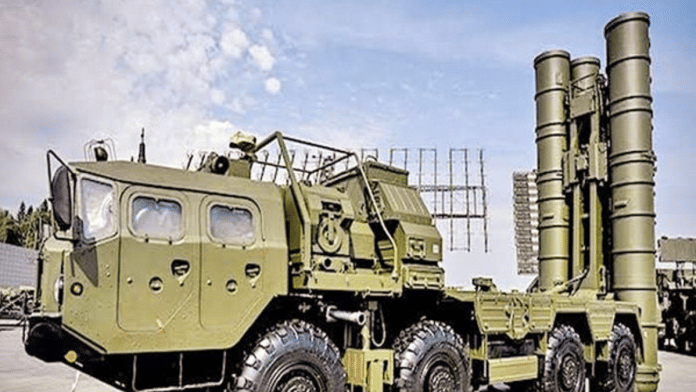
While the original plan was to deploy the fourth S-400 in the central sector focused on China, it is now learnt that it could be stationed along the western borders because of a small gap that exists despite the deployment of two systems there.
According to the current plan, three of the five systems are meant for Pakistan border, and two for Northern. Additional five systems will go into beefing up the Northern as well as other vulnerable areas to provide a comprehensive air defence cover for the entire country.
The S-400 will become India’s air defence umbrella and the main pillar of the defence grid.
The system had proved its worth during Operation Sindoor. Not only did the S-400 record its longest hit ever during the 88-hour conflict between India and Pakistan, the ability of the system to shoot and scoot in a short span of time, which allows it to evade enemy fire, was also proved.
On 7 May, 2025, the IAF took down a JF-17 aircraft of the Pakistan Air Force well within the Pakistani airspace and forced their fighters to draw back. However, the fighters did manage to enter a missing coverage area for a limited period to launch their munitions.
The S-400 is designed to knock down flying targets, including those equipped with certain stealth technologies, at a distance of about 400 km. The system is also capable of taking out ballistic missiles and hypersonic targets. Compared to its predecessor—the S-300—the S-400 has a firing rate that is 2.5 times faster.
India pursues a follow-on order for , cleared by the Ministry of Defence last month. ThePrint exclusively in November last year that the IAF was planning to procure five new S-400 systems based on its performance during Operation Sindoor.
(Edited by Mannat Chugh)

