



There’s a formula to it now, almost reassuring in its predictability. One part protein powder, one part Pinterest masculinity, and a chunk of “caught this candid, bro” energy. Bios don’t help much either, somewhere between “just here for vibes” and “6’0 because apparently that matters,” the personality has been workshopped into neutrality.
A lot of this sameness can be traced back to the internet’s latest obsessions, “looksmaxxing” and “mogging”. Looksmaxxing, as the name suggests, is the systematic optimisation of appearance, treating the face and body like a set of variables to be improved, refined, and, ideally, perfected. Skincare routines, gym cycles, posture, lighting, even chewing gum for a sharper jawline, nothing is too small if it promises a marginal gain.
Mogging, on the other hand, is about comparison and dominance, the idea of outshining others in the same frame. It turns desirability into a competition.
Instagram has turned both into a feedback loop. A certain kind of male influencer, gym-built, hyper-groomed, permanently lit like a campaign shoot, sets the standard. What began as an aspiration quickly became imitation, and imitation, at scale, has started to look like uniformity. The algorithm rewards what works, and what works gets repeated until it becomes the default.
Of course, trends shaping how people look are not new. The wavy, messy hair of the ’90s, the bootcut jeans, the boy-band polish of the early 2000s. But those trends sat lightly. They were stylistic choices, easy to adopt and just as easy to discard. This moment feels different. It is less about style and more about standardisation. Less playful, more prescriptive, and entirely performative.
There’s also an uncomfortable overlap with ideas that have circulated in manosphere and incel-adjacent spaces for years, the belief that attraction follows a hierarchy, there is a correct way to look, and that self-worth can be improved by climbing that ladder. Stripped of its more extreme language and repackaged through fitness culture and influencer aesthetics, it becomes easier to absorb, even aspirational.
There is now an entire internet economy built around this. Influencers with millions of followers offer grooming tips, dating advice, and step-by-step playbooks on how to be desirable. What started as self-improvement has morphed into standardisation.
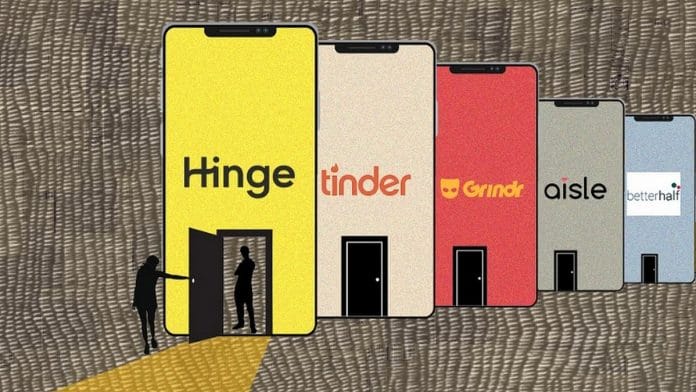
Dating apps are the perfect ecosystem for all of this. There’s no room for ambiguity when a decision is made in seconds. The individual is not a person anymore; they are a trend. So everything gets streamlined, personalities are flattened into “gym” and “travel”, something broadly agreeable and non-threatening.
The irony is that in trying so hard to stand out, everyone’s ended up blending in. The individuality feels outsourced. It’s less “this is me” and more “this performs well.” When did personhood start existing at the altar of influence?
And maybe that’s why the rare deviation feels so refreshing. A profile that isn’t perfectly calibrated, a photo that isn’t chasing approval, a personality that hasn’t been optimised into silence. In a sea of sameness, the real plot twist now isn’t perfection, it’s presence. Ten years ago, what would not have been a personality is now setting the standard because no one is trying.
(Edited by Saptak Datta)

