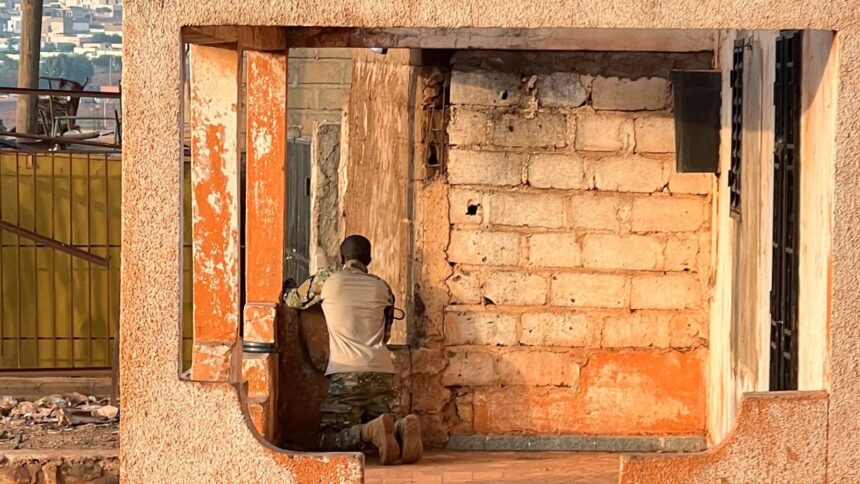
Gunmen reportedly launched a wave of attacks across Mali early Saturday, hitting the capital Bamako and several northern and central cities in what authorities and witnesses described as a likely coordinated assault. Mali’s army said in a statement that “unidentified armed terrorist groups targeted certain locations and barracks in the capital.” It added that soldiers were “currently engaged in eliminating the attackers.”
In a separate update, the army said unidentified “terrorist” groups had attacked multiple positions in the capital and elsewhere in the country, without specifying locations, and urged residents to remain calm as fighting continued.
Residents and journalists reported intense fighting in and around Bamako:
A Reuters witness said two loud explosions and sustained gunfire were heard shortly before 6 am near the Kati military base, a key installation outside the capital, with soldiers blocking roads in the area.
Another resident said, “We hear gunfire towards the military camp. It’s not the airport itself, but the camp that secures the airport.”
Reports of violence emerged from multiple regions, pointing to a broader, coordinated offensive:
A Gao resident described the intensity:
“The force of the explosions is making the doors and windows of my house shake. I’m scared out of my wits.”
A resident in Kati near Bamako said he was woken by gunfire and explosions.
Mohamed Elmaouloud Ramadane, spokesperson for the , said on Facebook that its forces had taken control of several areas in Kidal and Gao. The claim could not be independently verified.
Reuters, citing security sources, reported that the al-Qaeda-linked group Jama’at Nusrat al-Islam wal-Muslimin (JNIM) was involved. However, there was no immediate claim of responsibility from JNIM or Islamic State in the Sahel Province.
Mali has faced years of instability driven by:
The country, along with Niger and Burkina Faso, has seen a surge in militant attacks over the past decade. had pledged to restore security, but violence has persisted. Analysts say attacks have increased even as the junta
The government under Assimi Goita has relied on Russian mercenary support while reducing cooperation with Western countries, though recent reports suggest renewed engagement with the United States on intelligence-sharing operations.
(With inputs from AP, Reuters)