



The rise was led largely by crude exports, which increased by 270 kb/d to 4.6 mb/d. In contrast, petroleum product exports remained largely stable, rising marginally by 50 kb/d month-on-month to 2.5 mb/d.
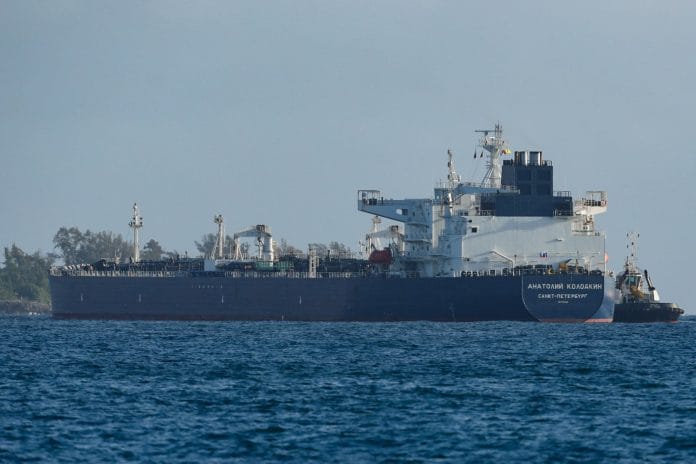
Russia exported nearly 4.4 mb/d of crude oil in March, of which about 2 mb/d was shipped to India and 1.8 mb/d to China, the IEA noted.
“Indian crude imports rose by 930 kb/d month-on-month after the United States waived restrictions on purchases for cargoes loaded before 5 March,” the report stated.
On 5 March, the United States announced a temporary 30-day waiver allowing Indian refiners to purchase Russian oil already at sea. Following this, India’s imports of Russian crude rose to a nine-month high in March, as previously by ThePrint.
The IEA also highlighted that large volumes of Russian oil had been stored at sea since October 2025. Due to the conflict, IEA notes that nearly 22 million barrels of this ‘oil on water’ reached Indian shores in March, while about 14 million barrels were delivered to China.
“In March, twelve Indian refineries processed Russian crude, compared with seven in February,” the report stated.
Higher global oil prices played a key role in boosting Russia’s export revenues.
“The Gulf war raised overall Russian crude prices by $32.70 per barrel month-on-month to $78.38 per barrel, sharply boosting crude export revenues to $11.5 billion, $2.2 billion higher year-on-year,” the report stated.
It added, “Product revenues followed a similar trend, rising by $3.9 billion month-on-month to $7.6 billion, as diesel and fuel oil prices jumped by 88 per cent and 93 per cent, to $143.82 per barrel and $61.10 per barrel, respectively.”
The report also flagged damage to key Russian oil infrastructure due to Ukrainian drone strikes in March.
“Following earlier strikes on the Black Sea port of Novorossiysk, Ukrainian drones targeted the Baltic ports of Ust Luga and Primorsk during the week of 23 March. At Primorsk, around 8 of 18 crude storage tanks were destroyed, while satellite imagery showed fires and heavy smoke at Ust Luga, affecting crude oil tanks and potentially the 160 kb/d crude splitter,” the report stated.
According to the IEA, the attacks halted exports from Primorsk for several days, while Ust-Luga remained offline for more than a week.
The three ports—Novorossiysk, Ust-Luga and Primorsk—together accounted for 68 per cent of Russia’s seaborne oil exports in 2025. Of this, 72 per cent was crude oil and the remaining 28 per cent petroleum products.
These ports are also critical for India, handling around 80 per cent of its crude imports from Russia.
(Edited by Viny Mishra)

