Nobody in the city wants to sound casteist. That would be vulgar. Unfashionable. Too obviously backward for the rooms many of us now inhabit. So the language has changed. We no longer say someone does not belong because of caste. We say they are “not a fit”. We don’t say they lack social capital. We say they need to be more “presentable”. We don’t say they are being excluded from certain circles. We say the environment is “not their vibe”.
The cruelty is in the euphemism.
I have seen how quickly an accent can become a passport. A surname can still do the work of an old Census. And people who proclaim themselves ‘modern’ and ‘liberal’ can become intensely alert when they hear a name, a language pattern, or a kind of confidence that does not arrive polished.
I have seen a talented person get rejected in an interview because they were not a “culture fit”—an exclusionary phrase to weed out first or second-generation learners. This culture is built by the Joshi/Subramanian/Chatterjee homogeneity, which has invisible boundaries to keep out the unwanted. In many urban spaces, caste no longer needs to be asked; it is inferred, sensed, sorted.
And that sorting is often done by people who would swear up and down that they’re anything but casteist.
I have been in rooms where English decided who could be taken seriously. Not just correct English, but a particular kind of English: smooth, quick, urbane, self-assured, often inherited. A kind of English that does not merely communicate ideas but signals membership. In those spaces, the absence of refinement is treated as a personal failure rather than a social condition. If you do not speak the way they speak, if you do not dress the way they dress, if you do not carry yourself with the same casual entitlement, you are not simply different. You are suspect.
This is where casteism reveals its urban genius. It no longer needs to openly banish people. It just ensures some people are always slightly embarrassed of themselves. And once embarrassment enters the room, hierarchy has already won.
This is why I think so much of the current discourse on merit is dishonest. It treats merit like a clean, neutral, almost sacred idea. In reality, merit is nothing more than beautifully packaged prejudice. It is used to justify who gets hired, who gets promoted, who gets heard, who gets invited back, who is called “sharp”, who is called “intense”, who is seen as “leader material”, and who is told to be “more refined”.
In practice, merit means familiarity.
“Culture fit” is another polished lie. It sounds harmless, professional. Sensible, even. It actually carries layers of questions. Do you look like us, sound like us, relax like us, joke like us, drink like us, network like us, and most importantly, did you come from the kind of world that made ours feel natural? “Culture fit” is “upper caste with a deodorant on”.
“Polish”, too, is a loaded word. Who decides what is polished? Who gets to define the ideal texture of speech, dress, body language, confidence, restraint, and ambition? In corporate India, polish is often a coded admiration for upper-caste habits of being. Those habits are not neutral. They are inherited. They are learned in homes where power has long been normal. And because they look effortless, they are mistaken for excellence. The recent incident of savarna feminists looking down at @lifeofpuja is a great example of this.
The result is a strange urban theatre. Everyone performs equality while the old exclusions remain beautifully intact.
I have begun to notice that casteism in cities does not always punish directly. It simply withholds ease and trust. Some people enter a meeting and are presumed to be competent. Others have to prove they are not a threat, not too emotional, not too political, not too conscious of injustice, not too much of anything.
And this is where the psychological burden becomes exhausting. Because the city tells you to forget caste while constantly forcing you to manage its consequences. You are asked to be ambitious, but not resentful. Articulate, but not intimidating. Visible, but not disruptive. Grateful, but not demanding. The moment you point out the code, you are accused of seeing caste everywhere. As though it is your imagination and not their pattern.
But caste is not an imagination. It is a system. And systems do not vanish because it becomes fashionable to deny them.
What troubles me most is that urban casteism often survives by borrowing the language of progress. It will speak of inclusion in meetings, but keep the same informal networks intact. It will celebrate diversity in brochures, while reproducing sameness in hiring. It will post about social justice on one day and quietly erase the very people that justice is meant for the next. It will make a symbolic gesture and call it a transformation.
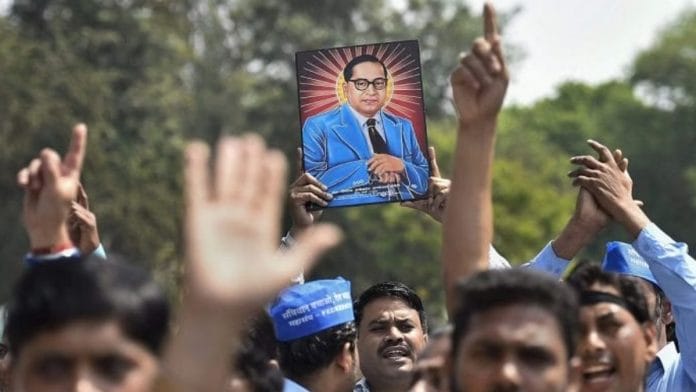
This is why I keep returning to BR Ambedkar. Not as a ceremonial icon, not as a poster, not as a quote for office walls, but as a direct challenge to the hypocrisy of modern India. Ambedkar was not asking for decorative equality. He was asking for a radical restructuring of social life. He understood that caste is not just about ritual or religion. It is about access, dignity, labour, mobility, language, desire, marriage, education, and power.
And yet, in the corporate world, Ambedkar is almost invisible.
We will happily observe holidays for festivals that feel culturally comfortable to the mainstream, but Ambedkar Jayanti is treated like a footnote. In too many private offices, there is celebration for festivals that carry the nation’s dominant social imagination, but almost nothing for the man who gave India its sharpest vocabulary for justice. We will decorate workspaces for traditions that reaffirm hierarchy, but hesitate to make space for the thinker who spent his life dismantling it.
That silence matters.
It matters that Raksha Bandhan is often embraced as a sweet cultural ritual, when it also rests on a very familiar patriarchal fantasy: the brother as protector, the sister as protected. It matters that Karva Chauth becomes office-friendly, visible, and socially legible in urban spaces. It matters because our calendars reveal our values. We make time for what we honour. And what we honour tells us who we think belongs at the centre of India.
There is also something deeply unsettling about how selectively Indian women, especially urban women, are encouraged to embrace tradition. Many of them are now visible in workplaces and boardrooms in leadership roles. But visibility without critical consciousness can still reproduce oppression. A woman can break a glass ceiling and still uphold the walls beneath her. She can fight patriarchy in one space and perform it in another. She can demand her own freedom while celebrating rituals that romanticise her subordination. The contradiction is more visible now.
Karva Chauth is a perfect example. A married woman fasting for her husband’s longevity is framed as devotion, love, and even empowerment. But I have never been able to fully accept that logic. Why is sacrifice feminised and celebrated so effortlessly? Why are women asked to turn their bodies into offerings for the emotional convenience of men? Why do we keep treating obedience as romance?
And why is Ambedkar—the leader who helped Hindu women imagine legal personhood through the Hindu Code Bill—so easily forgotten in the same social spaces? The irony is stark. A man who fought for women’s rights is sidelined, while rituals that quietly reaffirm patriarchy are displayed without shame.
Urban India loves the appearance of progress. It loves contemporary vocabulary. It loves panels on equality, film festivals on inclusion, and hashtags about empowerment. But progress is not a mood or a brand identity. It is not a LinkedIn caption. Progress would require confronting the fact that casteism has not gone away. It has only adapted to the aesthetics of modernity. That adaptation is visible everywhere.
It is visible in hiring rooms where the panel is “diverse”, but the outcome is not. It is visible in apartments where landlords speak the language of preference but mean prejudice. It is visible in schools that praise discipline while disciplining difference. It is visible in friendships where one person’s pain becomes “too political” the moment it is named. It is visible in institutions that want Dalit presence without Dalit interruption. Casteism in cities is not extinct. It is fluent.
Urban India isn’t post-casteism; it’s post-confession. It wants the benefits of hierarchy without the embarrassment of admitting to it. It wants access to the labour, talent, and resilience of marginalised people, but not the discomfort of actually sharing power.
Despite all this, the city does offer one thing rural spaces don’t: contradiction. In the city, the progressive, liberal, anti-caste mask can slip. Sometimes, the very people who speak most elegantly about equality are the ones most invested in the invisible preservation of casteism. That contradiction should embarrass us more than it does.
If casteism has become harder to admit, then the job before us is not merely to point at it. It is to strip away the politeness that protects it.
We must stop mistaking English for ethics. We must stop mistaking polish for principle. We must stop mistaking representation for justice.
And perhaps most urgently, we must stop pretending that the city is innocent simply because it has better lighting.
Casteism did not leave cities. It put on clean clothes, learned office etiquette, and became comfortable in curated spaces. Though it’s deeply political, it mastered the art of looking neutral. That is the version of casteism I have encountered, and the one I want to name without apology.
It’s not the loud casteism of open humiliation alone, but the smarter kind. The softer kind. The kind that smiles, schedules, shortlists, and excludes in perfect grammar. The casteism that uses tools such as “merit” and “culture fit”. The casteism that still knows exactly who belongs and who must keep proving that they do.
Casteism is not gone. It has just become harder to recognise because it speaks the language of cities now.
(Edited by Prasanna Bachchhav)