



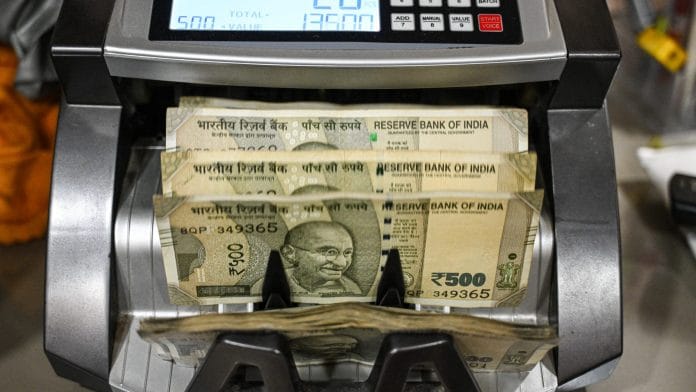
The rupee surged the most in 12 years Thursday as currency trading resumed after a two-day break. It gained almost 2% to 93.25 per dollar, having traded at an all-time low above the 95-per dollar level the earlier this week.
“This is again a signal that the central bank is willing to consider harsh steps that are nevertheless regressive and that its focus is on the stability of the rupee rather than liquidity for now,” said Abhishek Upadhyay, an economist at ICICI Securities Primary Dealership.
The risk is that such moves may undercut years of efforts to deepen India’s currency markets and improve price discovery. Liquidity across both onshore and offshore markets has expanded in recent years, a key factor in attracting foreign investors, and aligns with Prime Minister Narendra Modi’s broader push to boost the rupee’s global use.
Any sustained clampdown may deter participation, increase costs and ultimately make it harder for businesses and investors to hedge currency risk.
The measures amount to a coordinated push to flush out excess bearish rupee positions and speculative trades across the market, according to Kunal Sodhani, head of treasury at Shinhan Bank Ltd. in Mumbai. This may come at the cost of reduced liquidity and wider spreads between the onshore and offshore markets, he said.
“Overall, the RBI’s message is unambiguous,” he said. “The FX market is to function as a hedging mechanism aligned with real economic activity, not as a platform for leveraged speculation.”
Disclaimer: This report is auto generated from the Bloomberg news service. ThePrint holds no responsibility for its content.

