



The Feb. 1 budget had set gross borrowing of 17.2 trillion rupees for 2026-27, but this has since been reduced to 16.1 trillion rupees after the government switched 1.1 trillion rupees worth of short-term bonds into longer maturities.
The planned borrowing for the first half is lower than 8.7 trillion rupees estimated by a Bloomberg survey, but higher than 7.95 trillion rupees raised through bond sales in the current year.
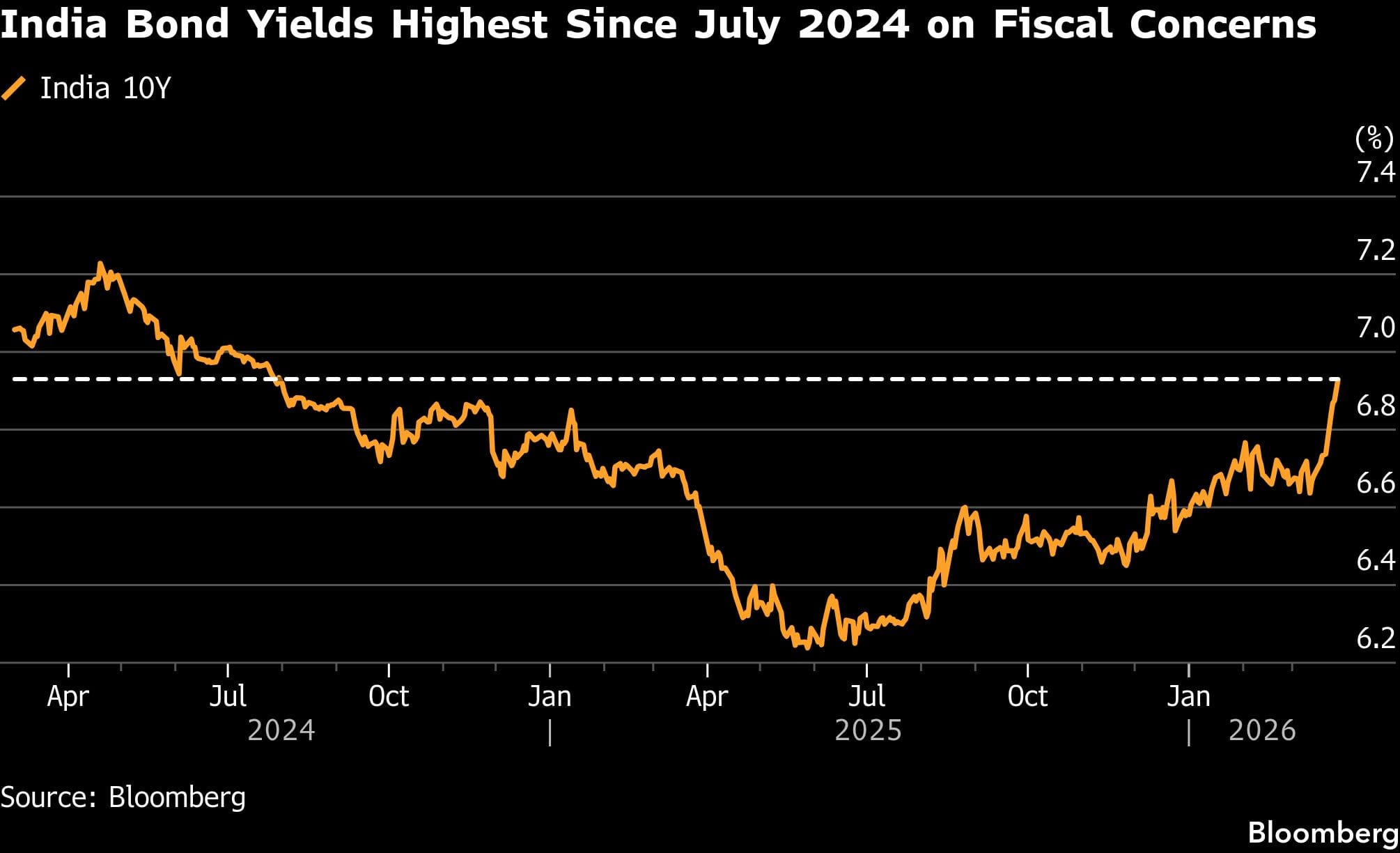
India’s 10-year bond yield rose to the highest level since Jul. 25, 2024 on Friday after the government cut excise duties on auto fuels, a move that may result in an annual fiscal hit of about 1.6 trillion rupees, according to an estimate by Emkay Global Financial Services Ltd.
This is likely to keep bonds under pressure, with yields having climbed around 20 basis points over the past week on concerns that higher oil prices will stoke inflation and strain government finances.
The government also said that 29% of borrowing in the first half would be through 10-year bonds, while 15-year papers would account for 14.5%. The share of 5-year bonds has been set at 15.4%. Borrowing through treasury bills for the April-June quarter has been pegged at 2.88 trillion rupees.
–With assistance from Rajesh Roy.
Disclaimer: This report is auto generated from the Bloomberg news service. ThePrint holds no responsibility for its content.

