



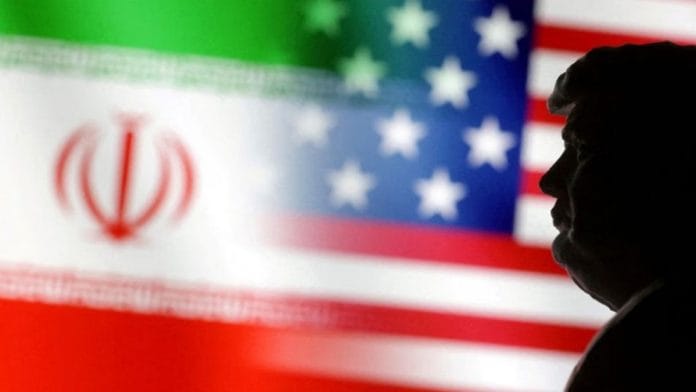
They are, in fact, holding Israel responsible for provoking the conflict. However, it must be understood that—first, the arrest and subsequent extradition of the Venezuelan President to the US, and now the attack on Iran—are viewed by experts as indications of America’s attempt to seize control of the world’s oil reserves. The international news agency Reuters notes that, before this, the US had already effectively secured control over Iraq’s oil assets through regime change. Waging wars in this manner to assert dominance on the global stage is undesirable.
While any war typically serves as a catalyst for inflation, the involvement of Gulf nations—which fulfill the majority of the world’s crude oil and gas requirements—in this conflict naturally drives up inflation through rising energy prices. Moreover, inflation is further exacerbated by shortages of goods and materials resulting from obstructions to maritime trade routes.
As the war drags on, this problem is assuming increasingly dire proportions. The combination of diminishing purchasing power caused by inflation, shortages of essential commodities, and governments’ reduced capacity to absorb these costs raises the spectre of social unrest.
It is evident that the common man ultimately bears the direct brunt of the rising inflation and shortages of essential goods caused by the war. Then there is the social unrest, which will definitely be the common man’s problem.
In times of war, investors tend to play it safe. Business confidence wavers, and uncertainty prevails. Consequently, instead of investing in stocks and bonds, people begin purchasing more precious metals. Naturally, stock markets begin to decline.
In the context of India, since the onset of the conflict, the Bombay Stock Exchange’s (BSE) Sensex has fallen by over 7 per cent. A similar situation is being observed in global markets as well.
A downturn in the stock market directly impacts ordinary people. On one hand, the value of their investment portfolio falls; on the other, the value of pension funds invested in the markets also declines.
This is how war impacts the economies of developing nations like India. First and foremost, rising oil prices lead to an increased outflow of foreign currency, resulting in a depletion of foreign exchange reserves.
Second, the local currency undergoes depreciation due to rising import bills and the outflow of capital by institutional investors. It is noteworthy that over the past three weeks of the conflict, the value of Indian currency has depreciated by approximately 3.0 per cent against the US Dollar—a trend that continues unabated.
Third, in an effort to mitigate inflation, governments are compelled to provide increased subsidies on energy, food products, and fertilisers, or to reduce taxes. This places an increased burden on the public exchequer, which, in turn, has a direct repercussion on inflation—a burden that ultimately has to be borne by citizens.
It is not only developing economies that will be affected; nobody will remain unscathed. Indeed, apprehensions regarding a severe economic recession in the near future are being voiced even within the US. International rating agency Moody’s states that there is a 49 per cent probability that the US will succumb to a recession within the next 12 months, and averting it will be difficult.
The factors cited behind this outlook include rising oil prices and international trade routes disrupted by war. With jobless economic growth on one hand and escalating prices driven by conflict on the other, a recession in the US is now considered almost inevitable.
Global food production is not distributed evenly across all nations—not every country is capable of ensuring its own food security independently. Such nations are compelled to rely on imports from food-exporting countries. War disrupts the movement of goods, thereby triggering a food security crisis in those nations.
Although India is largely self-reliant regarding its food requirements, it nonetheless remains dependent on imports for certain commodities, particularly edible oils and pulses. A rise in the prices of these specific commodities can also have an adverse effect on the lives of ordinary citizens.
In the long run, war leads to disruptions in trade and heightened uncertainty, resulting in reduced investment and a consequent slowdown in global GDP growth. Second, increased expenditure on warfare and post-conflict reconstruction compels governments to borrow more, leading to an accumulation of public debt and creating future fiscal pressures.
Third, war redirects the trajectory of technological innovation toward sectors such as defence, artificial intelligence (AI), and cybersecurity. While this may foster innovation in these specific fields, it simultaneously necessitates the diversion of resources away from social and developmental sectors. Overall, by altering economic priorities, war can undermine the prospects for balanced and sustainable global development.
Today, the imperative is to restore global peace and ensure that development is not hampered. Post-Covid, global growth, which is hovering around, has not come to the pre-Covid level of 3.5 per cent to 4.0 per cent.
It is projected that, due to ongoing conflicts, the global economic growth rate could further contract by an additional 0.2 per cent to 1.0 per cent.
Given the devastating consequences of war—ranging from the destruction of life and property on one hand, to declining growth rates, inflation, unemployment, and food insecurity for the common citizen on the other—such a scenario can in no way be deemed beneficial for the world. Nations across the globe must redouble their efforts to bring an end to these conflicts.
(Edited by Ratan Priya)

