



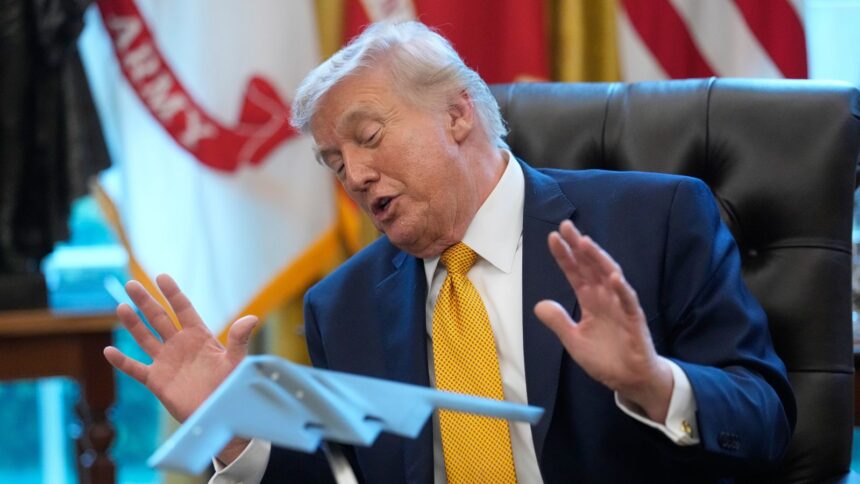
The words were blunt, even by Donald Trump’s standards. “I do believe I’ll be having the honour of taking Cuba. Taking Cuba in some form,” Trump told reporters at an Oval Office signing event on Monday. “Whether I free it, take it, I could do anything I want with it, you want to know the truth. They’re a very weakened nation right now,” he was quoted as saying by BBC.
The remarks delivered on Monday have set off fresh alarm bells in Havana, Washington, and beyond. The relationship US and Cuba , already one of the most fraught bilateral dynamics in the Western Hemisphere, has entered a volatile new phase.
Beneath the inflammatory rhetoric lies a more complicated reality: the two countries are, in fact, talking. Cuba’s President Miguel Daz-Canel confirmed in a televised address that Cuban officials had held talks with US government representatives, saying the process was “sensitive” and conducted “with seriousness and responsibility”.
Daz-Canel said the purpose was to identify bilateral problems and seek solutions based on their severity and impact. But here’s the catch – Washington’s objectives in those talks appear to go well beyond diplomacy.
The New York Times reported that removing Cuban President Daz-Canel from office is a key US objective in the bilateral talks. That’s not a negotiation; that’s a bid for hostile takeover.
Meanwhile, the economic screws are tightening. Trump halted all Venezuelan oil shipments to Cuba and threatened tariffs on any country that sells oil to the island nation. Cuba used to receive around 35,000 barrels of oil daily from Venezuela, which stopped after the capture of Venezuelan president Nicolas Maduro in January.
Cuba says it has not received an oil shipment in three months, with severe energy rationing and extended power outages now crippling the country. On Monday, Cuba’s entire electric grid collapsed, leaving 10 million people in the dark, reported BBC.
Cuba’s troubled history with Washington stretches back well over half a century, but the Cold War turned it into something much bigger.
In 1959, Fidel Castro overthrew a US-backed government. Two years later, a CIA-sponsored invasion at the Bay of Pigs failed catastrophically. Then in 1962, the Cuban Missile Crisis brought the world to the brink of a nuclear war, after the Soviet Union deployed ballistic missiles on the island just 90 miles from Florida. The standoff ended only when Washington pledged not to invade Cuba, a commitment that has held through more than a dozen presidencies.
The US has maintained a strict trade embargo on Cuba since 1962. Relations thawed briefly under Barack Obama, who pursued normalisation, but Trump reversed many of those gains during his first term. Now, in his second, he’s going further than any predecessor, openly musing about a takeover and regime change.
A UN panel of human rights experts this month questioned Trump’s stated rationale that Cuba poses an “unusual and extraordinary threat” to US national security, describing the fuel blockade as “an extreme form of unilateral economic coercion” that violates international law.
The situation is fluid and unpredictable right now. The geopolitical situation is already volatile as it is. Trump told reporters aboard Air Force One on Sunday that “we’re going to do Iran before Cuba”, suggesting Havana is next in a queue of geopolitical targets.
🇨🇺🇺🇸President Trump on CUBA:
“Cuba is a failed nation. Cuba also wants to make a deal, and I think we will pretty soon either make a deal or do whatever we have to do.”
“we’re talking to Cuba, but we’re going to do Iran before Cuba.”
“They’ve been waiting 50 years for what’s…
— Donald J Trump Posts TruthSocial (@TruthTrumpPost)
Earlier, senate Democrats filed a war powers resolution to prevent the use of military force in Cuba without congressional approval. This showed that even within the US, Trump’s Cuba strategy is contested.
ALSO READ |
For now, Cuba’s government is negotiating, its people are rationing fuel, and a US president is publicly declaring he can “take” a sovereign nation. Trump’s decisions on Venezuela, Iran, and now, Cuba and his flip flops on tariffs and oil prices have constantly kept the global trade and geopolitical arenas volatile.

