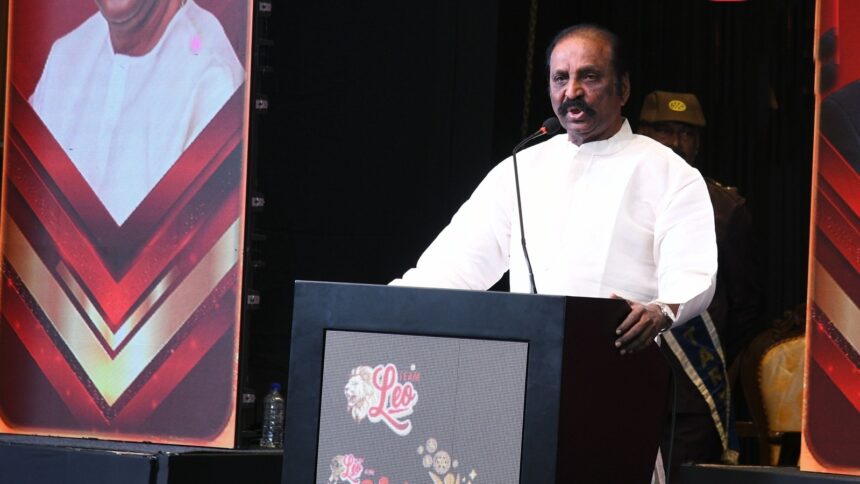
The Tamil poet and lyricist Vairamuthu, whose verses have shaped the language of popular music and modern Tamil poetry for more than four decades, has been chosen for the 2025 Jnanpith Award, India’s highest literary honour. The announcement on Saturday placed him among a small group of Tamil writers to receive the prize — and immediately reopened a long-running debate about artistic achievement, accountability and the unresolved tensions of the #MeToo movement.
The Bharatiya Jnanpith literary organisation said the 60th Jnanpith Award recognised Vairamuthu’s contributions to Tamil literature and his wide influence as a poet and lyricist. Since 1964, the award has been presented annually to writers in Indian languages and carries a cash prize of Rs 11 lakh, a bronze statuette of Saraswati and a citation presented by the President of India.
Vairamuthu, 72, becomes only the third Tamil writer to receive the award, after Akilan in 1975 and Jayakanthan in 2002. Unlike them, he is the first to be honoured primarily for Tamil poetry rather than prose.
“To me, literature should elevate humankind,” Vairamuthu said after the announcement. “I travel among their dreams and emotions. I had two wings. With this award, I feel I have two more wings. I dedicate this award with gratitude to Tamil society and its people,” he said.
Born in Theni district in 1953, Vairamuthu published his first poetry collection, Vaigarai Meengal, at the age of 18. He later entered the Tamil film industry as a lyricist with the 1980 film Nizhalgal, working with director Bharathiraja and composer Ilaiyaraaja. Over the next four decades, he wrote more than 8,000 songs and won seven National Film Awards for his lyrics, earning the honourific “Kaviperarasu”, or Emperor of Poets.
The award, however, has been met with sharp criticism from some writers, artists and activists who point to sexual harassment allegations made against him during the #MeToo movement in India.
Singer Chinmayi Sripada, who was among those who accused Vairamuthu in 2018, criticised the recognition in a statement on social media. “In 2018, multiple women of different age groups named one poet-lyricist as their molester,” she wrote, adding, “Today, the Jnanpith is awarded to the man… The collective voices of the women who named him were silenced.”
Responding to a congratulatory message posted by the actor and politician Pawan Kalyan, she added that he might not be aware that the poet had been “named by several women”, questioning why politicians were publicly celebrating the award.
Some critics said honouring Vairamuthu diminished the experiences of those who had spoken out. Others, including supporters of the poet, argued that his literary work should be judged separately from allegations.
Prominent Tamil writer Jayamohan, however, issued one of the strongest criticisms, describing the decision as an affront to Tamil literature itself. In a sharply worded essay in his Tamil blog, he argued that the award reflected political and institutional calculations rather than literary merit and warned that it would damage the standing of modern Tamil writing in India’s broader literary landscape.
Controversies surrounding Vairamuthu reflect a deeper, unresolved tension that has accompanied many cultural honours in recent years: whether the body of work of an artist can, or should, be separated from accusations about the person behind it.
India’s #MeToo movement, which gained momentum in 2018, emerged largely from frustration among women who felt conventional systems and the legal process often failed to deliver justice. In many cases, allegations circulated widely in the public sphere but did not result in formal legal findings.