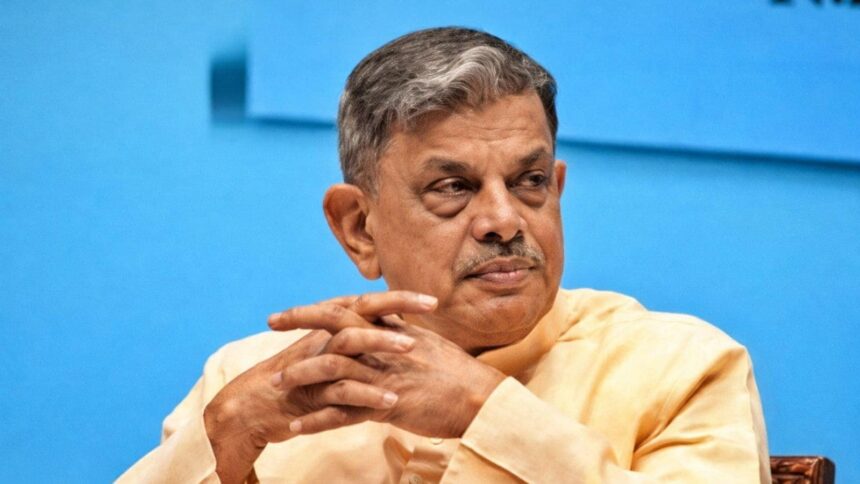
The Rashtriya Swayamsevak Sangh (RSS) Sunday said people may express grief over the but cautioned that such sentiments should not disturb social harmony, as the organisation also announced a major structural overhaul to manage its expanding nationwide network.
Addressing a press conference on the concluding day of the RSS’s highest decision-making body meeting, the Akhil Bharatiya Pratinidhi Sabha, at Samalkha in Haryana, RSS general secretary Dattatreya Hosabale said the Sangh does not intervene in people’s emotional responses but emphasised that must remain peaceful.
“People have their own sentiments, and Sangh doesn’t get into that. Expression of grief or sentiments should happen in a peaceful manner without targeting any other community,” Hosabale said when asked about protests in parts of the country following Khamenei’s assassination.
He added that mourning the death of a person was consistent with Indian civilisational values, regardless of differences. “Expression of grief on someone’s death can happen anywhere in the world. According to Indian traditions, there may be enmity with a person till he is alive; after death, there is no enmity,” he said, citing the episode from the Ramayana where Rama asks Lakshmana to pay respects to the slain Ravana.
“So, there is nothing wrong in people expressing grief on someone’s death, but without disturbing the peace of society,” he said.
On the ongoing conflict in West Asia, Hosabale said the RSS had no direct role in geopolitical developments but hoped for an early end to the hostilities. “Sangh has no role in what is happening in West Asia, we only want that there should be peace in the world. Wars happen because of multiple reasons. But they should end quickly, and normalcy should return,” he said.
He added that the organisation trusted the Union government’s handling of the situation. “We believe that the government is doing everything necessary to secure the interests of India. Whatever the Indian government is doing is right,” he said.
Asked about the ongoing dispute surrounding the to deal with caste-based discrimination, Hosabale declined to comment, saying the issue was before the courts. “The matter is sub judice and the Sangh doesn’t speak on such matters,” he said.
Hosabale also announced that the RSS has decided to undertake a structural reorganisation in view of the rapid expansion of its activities across the country. According to him, the issue had been discussed in the last few internal meetings.
“As the Sangh work is expanding — now we have more than 88,000 shakhas across the country — to properly manage this an idea has been floated to decentralise the Sangh structure,” he said.
Under the proposed changes, the organisation will move from the current prant-level administrative units to smaller sambhag-level units to improve coordination. “Instead of 46 prants, there will now be more than 80 sambhags,” Hosabale said, adding that the new framework would come into effect from next year.
The annual meeting of the Akhil Bharatiya Pratinidhi Sabha, the RSS’s highest decision-making body, reviews the Sangh’s organisational work and outlines its priorities for the coming year.