



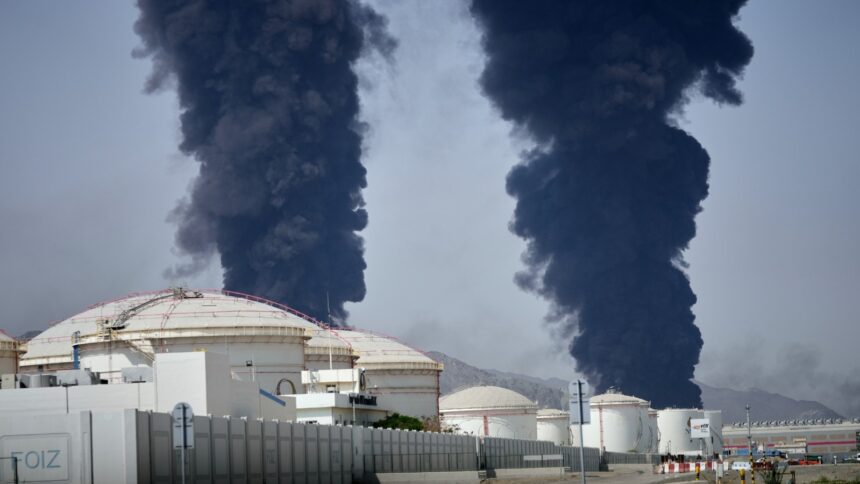
Hours after the US struck Iran’s Kharg Island, a vital oil hub, on Saturday, fires were reported in the United Arab Emirates’ coastal city of Fujairah, which hosts major oil export terminals.
Visuals of thick black smoke billowing from an oil installation in the port city were circulated online. The development comes after Iran’s Revolutionary Guards (IRGC) responded to the US assault, saying that Washington’s interests in the UAE were legitimate targets.
Following the incident, some oil-loading operations at the location have been suspended. The fire reportedly broke out due to debris from an intercepted drone.
Since the war began on February 28, the US (and its allies) and Iran have been targeting each other’s strategic installations in West Asia, including ports, airports, oil refineries, and military locations.
Iran has effectively blocked trade through the Strait of Hormuz, a narrow channel through which a fifth of the world’s energy transits. The blockade has triggered a surge in global oil prices, and it is being viewed as Tehran’s strategy to build pressure on Washington’s regional allies to persuade the White House to end the confrontation, which has claimed over 2,000 lives so far.
Iran threatened to strike more UAE ports on Saturday, including Jebel Ali port in Dubai, Khalifa port in Abu Dhabi, and Fujairah, according to Iranian news agencies.
Fujairah is the outlet for about 1 million barrels per day of the UAE’s Murban crude oil – a volume equal to about 1 per cent of global demand, news agency Reuters reported.
On the other hand, Kharg, referred to as the “orphan pearl of the Persian Gulf,” hosts facilities that process 90 per cent of Iran’s total oil exports – approximately 950 million barrels every year.
In a Truth Social post, Trump said US forces had “totally obliterated” Tehran’s military infrastructure on the Island, and warned its oil facilities would also be targeted if Iran chooses to “interfere with the Free and Safe Passage of Ships through the Strait.”

