The wild can often surprise with the weirdest physical traits among animals. One such feature is the weird nose shapes, which do much more than just smell. Some are built for hunting, some for attracting mates, and a few double as tools for survival in extreme environments. Here are six species that have some of the strangest and most specialised noses on Earth, turning their faces into remarkable examples of evolution at work.
The star-nosed mole has one of the most unusual snouts in the world. Its nose is ringed with 22 fleshy, pink tentacles packed with thousands of touch receptors. This allows the mole to detect prey almost instantly, even in total darkness. It lives in wet, muddy areas of North America and can even “smell” underwater by blowing bubbles and pulling them back in to pick up scent particles.
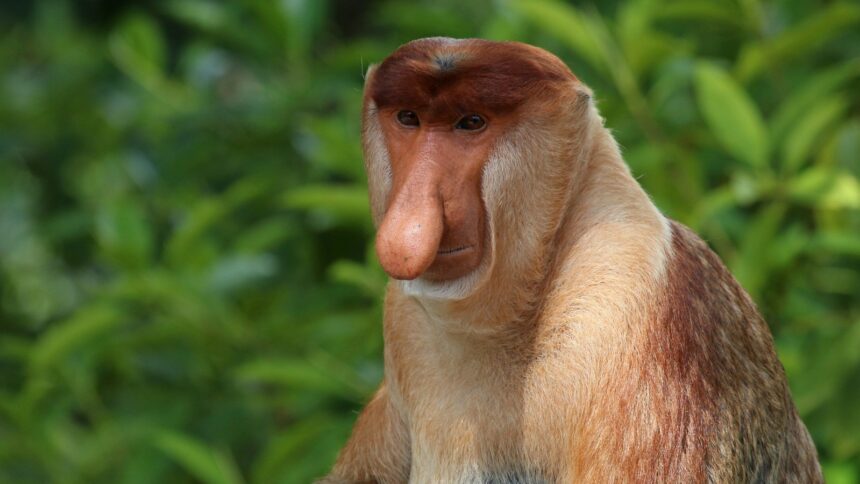
Native to Borneo, the proboscis monkey is famous for the large, drooping nose found only in males. These oversized noses help amplify their calls, making them sound louder and deeper during mating season. Females are thought to prefer males with bigger noses, linking this strange feature directly to attraction and social status within groups that live in mangroves and river forests.
The saiga antelope of Central Asia has a large, flexible nose that resembles a small trunk. This unusual structure helps filter out dust during dry summers and warms freezing air before it reaches the lungs in winter. During the breeding season, males also use their enlarged noses to produce loud calls that carry across the open степpe.
is actually a long, muscular nose that has evolved into one of the most versatile tools in the animal world. It is used for smelling, breathing, touching, grabbing food, and drinking water. With tens of thousands of muscles, the trunk is strong enough to move heavy branches yet sensitive enough to pick up tiny objects, making it essential for survival in the wild.
The hammer-headed bat, found in parts of Africa, has a large, oddly shaped snout that gives it a distinctive appearance. Males have especially enlarged facial features, which help amplify their calls during mating displays. These loud vocalisations echo through the forest at night as males gather and compete for female attention.
The giant anteater has a long, tube-like snout that makes up much of its head. Inside is a powerful sense of smell and a long, sticky tongue that can flick in and out rapidly to gather ants and termites. With no teeth, the anteater relies entirely on its specialised nose and tongue to find and consume thousands of insects each day.