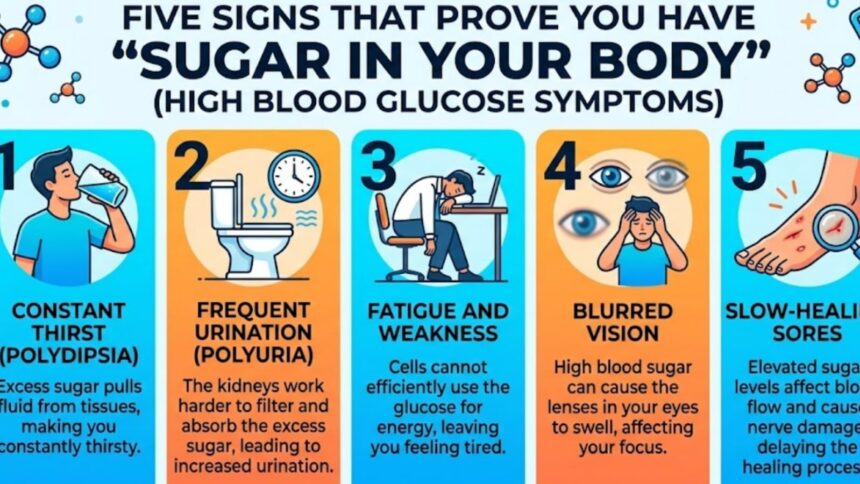
In an Instagram video, a nutritionist recently listed five signs that prove you have “sugar in your body”:
“Pehla sign: Aapko bahut zyada urine aata hai (frequent urination)
Sign 2: Aapko bahut zyada pyaas lagti hai (excessive thirst)
Sign 3: Aapko bahut zyada bhook lagti hai (constant hunger)
Sign 4: Aapko brain fog rehta hai
Sign 5: Skin tags ya skin discolouration — body ke kisi bhi hisse mein.”
DISCLAIMER:
But how medically accurate are these claims? And when should these symptoms actually raise concern? According to Dr Vikram Jeet Singh, Senior Consultant – Internal Medicine at Aakash Healthcare, these symptoms can be meaningful, but only when assessed properly.
“These three symptoms — polydipsia, polyuria and polyphagia are classic signs of high blood sugar,” says Dr Singh. “However, they become concerning when they persist for more than a couple of weeks, especially if accompanied by unexplained weight loss or unusual fatigue.”
He explains that persistently elevated blood glucose levels force the kidneys to excrete excess sugar in the urine, causing dehydration and increased thirst. Meanwhile, when insulin does not function effectively, cells fail to absorb glucose efficiently — leading to increased hunger.
“At that point,” Dr Singh adds, “a fasting glucose test, HbA1c, or an oral glucose tolerance test
“Brain fog can sometimes occur due to rapid spikes or fluctuations in blood sugar,” Dr Singh explains. “Insulin resistance can affect how efficiently the brain receives energy.”
However, he cautions against oversimplification. “Brain fog is not specific to high sugar. It may also stem from poor sleep, stress, hormonal changes, nutritional deficiencies or even certain medications. If cognitive sluggishness is persistent, medical evaluation is necessary instead of assuming sugar is the only cause.”
Skin tags and dark, velvety patches, especially around the neck,
“There is a known medical association between insulin resistance and conditions like acanthosis nigricans,” says Dr Singh. “But this link is not absolute. Many people with skin tags may have completely normal sugar levels.”
He advises viewing these changes as “possible warning signs rather than diagnostic proof.”
“They should prompt testing, not panic,” he adds.
The danger of self-diagnosis through social media
“It can be misleading to conclude you have high blood sugar based only on symptoms seen in videos,” Dr Singh cautions. “Proper laboratory testing is essential.”
He recommends:
“Home glucose monitors can be helpful for monitoring, but they do not replace professional evaluation. These are early warning signals the body may give. Timely testing allows early lifestyle intervention, which can often prevent progression from prediabetes to diabetes,” he concludes.
DISCLAIMER: This article is based on information from the public domain and/or the experts we spoke to. Always consult your health practitioner before starting any routine.