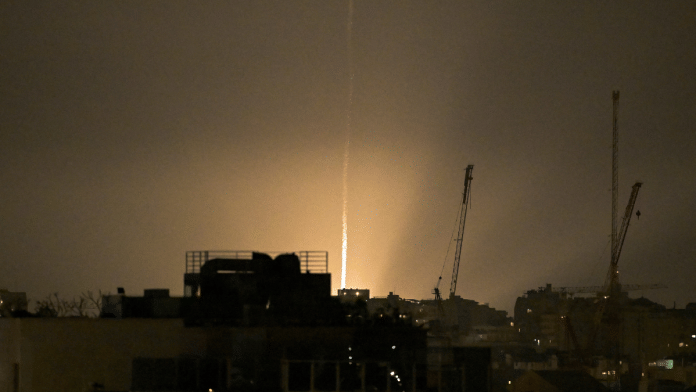
Two things make drones and missiles defy the logic of an enemy’s superior military capabilities.
One is comparative costs. Preventing a $20,000-30,000 drone from inflicting damage can cost you 10, 20 or 50 times that cost using radars, space-based surveillance and missile-defence systems. Also, if you send enough drones across, any defence system (say, effective at targeting 100 drones simultaneously), can be overwhelmed by larger incoming numbers. Some drones will get through, as we saw not only in Ukraine, but recently in the Gulf countries as well.
Two, the willingness to extend the damage to civilian and economic assets. The old rules of warfare, of not targeting civilians during war, are dead. Both because terrorist organisations like Hamas have used schools and hospitals to hide their fighters, and even because the big powers no longer care about that. Today, the US is unfazed by the fact that a girls’ school may have been hit in its initial strikes in Iran, while Israel demolished much of Gaza’s civilian buildings in its war on Hamas terror earlier. Iran, for its part, has been targeting commercial hubs in the UAE, Bahrain and other Gulf countries to impose costs on those booming economies. Their aviation, tourism, realty and oil sectors are piling on losses. What helps the weaker countries (in this case Iran) to resist is the promise of causing enough damage to richer and more powerful enemies. With the US and Israel targeting not just ammunition and oil dumps, but even desalination plants vital community resources, it was hardly likely that Iran would somehow be circumspect in what it targets with its drones and missiles.
The simple logic that Iran has used is this: if you have more to lose than me, the costs of continuing the war is higher for you than me.
Asymmetric warfare is about using unusual or cheap resources (including human lives) to make the enemy pay more. This is the logic of terrorism, and no matter how many billions you spend on intelligence, surveillance and defence systems, the terrorist who does not care for his life will always win – in terms of the damage he can inflict. Even if a country prevents all attacks, it will pay a high price in terms of investments in mounting a foolproof defence. At some point, it will become uneconomical to spend that kind of money to prevent the odd terrorist attack or two.
The economic decline of America began after 9/11, when it not just decided to build the most expensive homeland security infrastructure in the world, but also wage wars on countries that were said to be supporting terrorists or alleged to be building nuclear weapons. According to , the US spent $3 trillion (ie, three-quarters of the current Indian GDP) or more in the Iraq war. In the current Iran conflict, the in just the first two days of the war. Israel is probably spending just as much. The costs are bound to mount if the campaign continues for long, and this does not include the costs to the global economy from inflation and disruptions in trade and business opportunities.
The lesson for India, which faces an inveterate and desperate foe like Pakistan on its west, is that it must have an antidote to asymmetric warfare that is far less costly than sending $250,000 missiles to bring down $30,000 drones, or spending millions of rupees defending civilian, defence and business infrastructure, including refineries and software hubs and defence installations producing ammo, warships or fighter aircraft.
The most important point to remember as far as Pakistan is concerned is this: it has very little to lose, while India has much to lose. Whatever antidote we create, it must also clear the cost-benefits test. It is not enough to have expensive defence shields that stop drones and missiles, but drive a hole through your fisc.