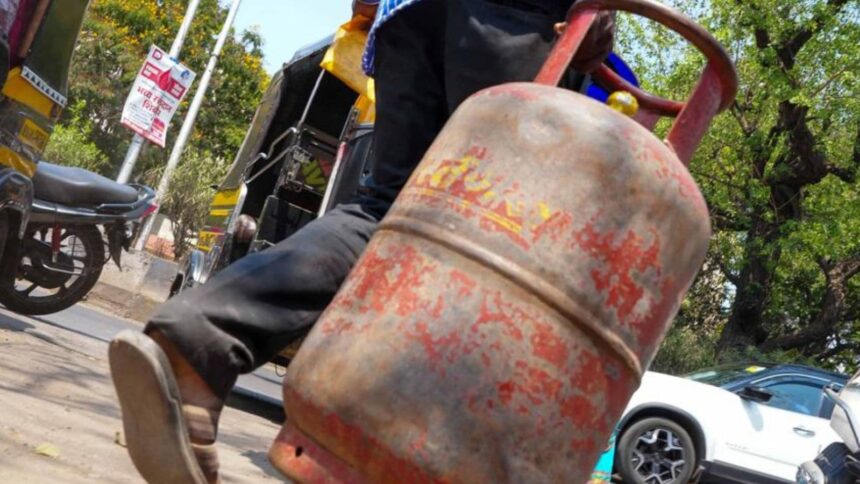
As concern rises around the country over a following the disruption of supplies of petroleum from the Middle East, the Union government has directed law enforcement agencies to step up measures to prevent the spread of panic, including closely monitoring social media.
The focus is on putting a lid on rumours and averting panic-booking of gas cylinders, as well as on preventing hoarding and black marketing of liquified petroleum gas (LPG).
The directions were issued after a high-level meeting chaired by the Union Home Secretary on Wednesday (March 11) with Chief Secretaries and Directors General of Police of all states and Union Territories to review the situation.
Earlier on March 9, invoked the Essential Commodities Act, 1955 to divert natural gas to “priority sectors” that directly impact millions of common consumers. Under The Natural Gas (Supply Regulation) Order, 2026, the Union Ministry of Petroleum and Natural Gas had said that liquefied petroleum gas (LPG), piped natural gas (PNG) for households, and compressed natural gas (CNG) for vehicles will have precedence over other natural gas-consuming sectors.
LPG is produced by refining crude oil. Some LPG is produced by refineries in India, but more than 60% of LPG A very substantial part of India’s LPG imports pass through the Strait of Hormuz, where the ongoing war has all but choked shipping.
During the meeting on Wednesday, states were asked to remain proactively prepared to prevent any law and order issues arising out of supply concerns or misinformation.
Police control rooms have been asked to closely monitor calls related to LPG or petrol shortages, crowding at distribution points, and any
Intelligence units have also been tasked with intensifying monitoring of social media platforms to flag posts, videos or messages related to fuel supply issues and identify instances of rumour mongering or attempts to create panic.
District police units have been directed to maintain strict vigil at LPG agencies, petrol pumps and other distribution points to regulate crowds and prevent disorderly queues.
Officials said police have also been asked to closely monitor for any instances of hoarding or black-marketing of LPG cylinders or petroleum products in violation of orders issued under the Essential Commodities Act.
A senior Petroleum Ministry official, joint secretary Sujata Sharma, said in a statement on Wednesday that some panic booking and hoarding behaviour has been observed due to “misinformation”.
She added that the normal LPG delivery cycle—two-and-a-half days from the time of booking—is being maintained, and appealed to consumers to not rush-book cylinders.
The Ministry issued the statement amid growing concerns on cooking gas availability from different parts of the country. Commercial entities have complained of a shortage of LPG, as the government has decided to prioritise household supplies of the fuel. There are also reports of black-marketing of LPG cylinders.
Following the meeting on Wednesday, authorities have been instructed to coordinate closely with district administrations and civil supplies departments to ensure real-time sharing of information regarding supply and distribution.
Police stations and field units have been directed to respond promptly to complaints or distress calls related to fuel shortages.
The advisory has also asked district police forces to take legal action against individuals or groups spreading misinformation that could trigger panic, and to hold coordination meetings with LPG distributors, petroleum retailers and transporters to assess ground-level supply conditions and address safety concerns.
Officials added that police units have been asked to prepare updated inventories of LPG distribution points, godowns and retail outlets in their jurisdictions and conduct periodic patrols around such locations to prevent crowding, diversion of supplies or any potential law and order disturbance.
Public relations officers have been tasked with monitoring media and issuing clarifications to counter misinformation and prevent panic among citizens.