The idea of relevance often becomes a quiet pressure point, especially for women as they move through different stages of life —from careers and caregiving to rediscovery as their roles begin to shift.
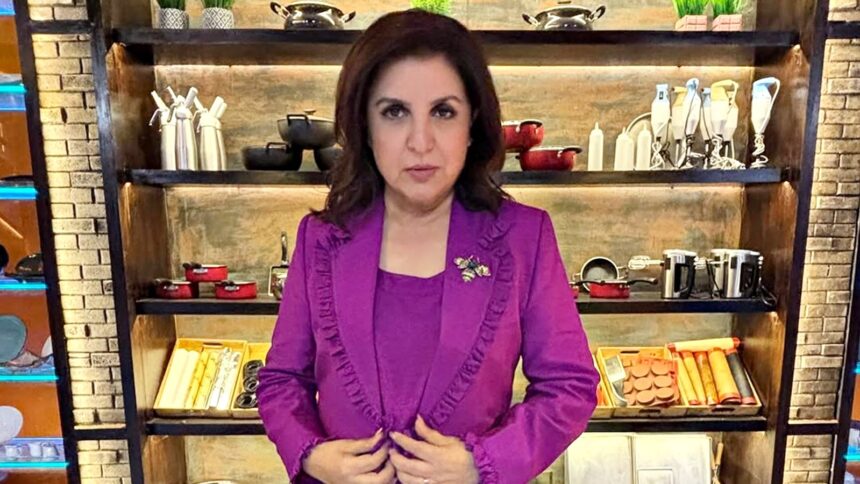
For many, relevance gets tangled with visibility or productivity—how much they’re doing rather than simply being. But filmmaker and choreographer Farah Khan recently questioned this notion in a heartfelt conversation with actor Kajol, saying she dislikes the very word.
During a conversation on Kajol and Twinkle Khanna’s chat show Two Much, when asked about how she has managed to stay relevant, Farah replied, “See, I don’t like that word, Kajol, because I feel every person is relevant in some way or the other, even if you’re not working.”
She continued, “I’ve always felt, I’m relevant to my children or to my husband or to my mom or, you know, even, I think that word somehow, it puts down people who are not going out and working actively.”
Farah also touched on how many women begin to feel invisible or purposeless once their children grow up and move away. “ and feel that once the kids go away, now my life is over. They lose their relevance. They feel that they’ve lost their relevance,” she said.
She added that finding joy in work and self-fulfilling activities can help counter that loss of identity: “You can’t, your life can’t revolve around another person’s, I feel the happiness has to come from within and from your work. My work actually gives me a lot of pleasure.”
Sonal Khangarot, licensed rehabilitation counsellor and psychotherapist, The Answer Room, tells indianexpress.com, “As a psychotherapist, I often see women internalise the belief that their worth is tied to how much they do rather than who they are. This conditioning starts early — girls are praised for being responsible, helpful, and achieving, which subtly links love and validation to performance. Later, career success becomes a stand-in for identity. A working woman who felt ‘invisible’ after leaving her job to care for her child — not because her life lacked meaning, but because society rarely values unpaid roles.”
Khangarot adds that shifting this mindset begins with redefining success as being rather than doing: nurturing self-compassion, recognising emotional labour as real work, and celebrating rest and joy as equally purposeful.
Khangarot states that culturally, women are often socialised to be nurturers first and individuals second — taught that their worth lies in self-sacrifice. Over the years, this creates what psychologists call “role enmeshment — when one’s .”
Women in therapy often struggle to answer simple questions like, “What do you enjoy?” because their entire emotional energy has gone into others. “When that role shifts, they feel unanchored. Socially, there’s also limited validation for women’s identities beyond motherhood or service,” states Khangarot.
The healing begins when they allow themselves to rediscover autonomy — pursuing interests, friendships, and goals unrelated to family. It’s not about replacing the old role but expanding identity to include the self, not just the caregiver.