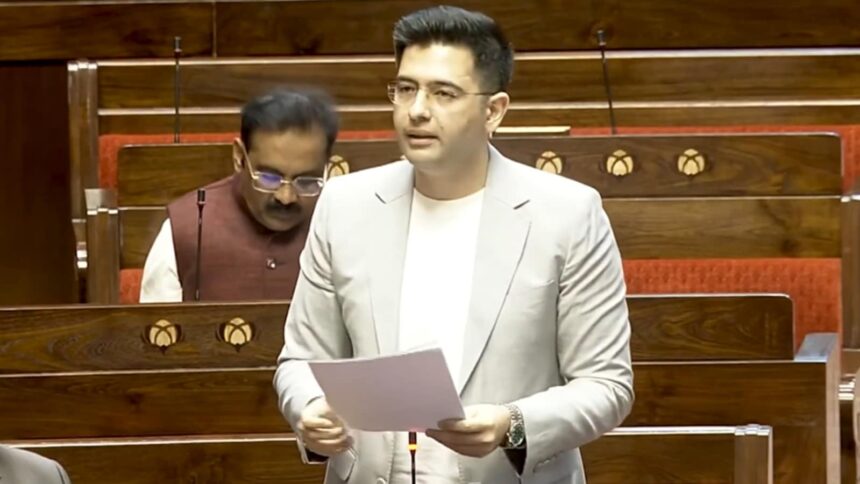
Member of Parliament in the Rajya Sabha, Raghav Chadha, recently shared that his parents, especially his mother, weren’t too happy when he entered politics. “When I got into politics, my parents, especially my mother wasn’t happy. Woh yeh kehti thi ki durr raho rajneeti se. Madad karo, desh ki seva karo. Jitna kaam kar sakte ho, jitna samay de sakte ho, desh ke liye do lekin don’t go into active politics. (She used to say to stay away from politics. Help and serve, but stay away from active politics.) Rajneeti has become a bad word,” he said.
Stressing that he wants more young people to join politics, , a chartered accountant by profession, told Curly Tales: “I always say when a child is growing up, parents often say become an engineer, doctor, or chartered accountant. Koi nahi kehta neta banna hai. Why? Because politics has become a bad word. I think it’s disappointing that young people don’t want to get involved in politics. I had the opportunity to serve as a young member of Parliament in the . India is a young country. Desh yuva hai. Lekin neta bhi toh yuva hone chahiye. It is my personal dream that 50 per cent of India’s members of Parliament should be young people.”
Reflecting on his strongly worded sentiment, Delnna Rrajesh, psychotherapist and life coach, said: “This is not about ageism.” It is about the representation of perspective. “Young leaders often bring urgency, technological awareness, and a stronger understanding of contemporary issues such as mental health, climate anxiety, startup ecosystems, digital economies, and global mobility. They speak the language of their generation because they are living it,” shared Delnna.
Entering politics in India is not simply a career choice. According to Delnna, it is a cultural negotiation. “Many families discourage it not because they lack patriotism, but because they fear instability, public scrutiny, reputational risk, and emotional toll. From a psychological standpoint, parents’ reluctance reflects protection, not pessimism. They want their safe, respected, and stable. Politics feels unpredictable,” expressed Delnna.
There is also a deeper emotional layer. Delnna said that leadership requires thick skin. “Public life invites judgment. Young individuals today are already navigating performance pressure, comparison culture and social media visibility. Entering politics adds another layer of exposure,” said Delnna.
Which is why mentorship and emotional resilience training become crucial if more youth are to enter governance.
If young Indians are to step into public leadership, three shifts are essential, as per Delnna:
*We must redefine politics as a structured public service, not a power pursuit.
*We must create institutional pathways where merit and ethics are valued, not only lineage or influence.
*We must psychologically equip youth with resilience, , and value-based clarity before they step into high-pressure public roles.
The dream of having fifty per cent young in the Parliament is aspirational; it needs to be supported by “ecosystem reform and cultural encouragement”.
“When a child grows up believing that public service through politics is honourable, ethical and impactful, the narrative changes. And perhaps that is the deeper message here,” said Delnna.